A surge in narco-related killings in Andalusia has reignited demands for the return of OCON Sur. The elite Guardia Civil unit was dissolved four years ago. Authorities now debate its effectiveness as violence escalates and traffickers adapt.
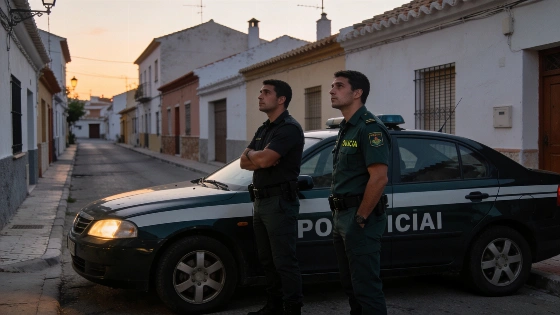
Four people were shot dead in just three days. This is the new reality in parts of Andalusia, where narco violence has surged since the dismantling of OCON Sur. The elite Guardia Civil unit, once the main force against drug trafficking in the Strait, was dissolved in 2022. As traffickers grow bolder and insecurity deepens, the debate over bringing back OCON Sur has returned to the political spotlight.
Juanma Moreno, president of the Junta de Andalucía, has publicly called for the unit’s reinstatement, pointing to the rise in violence and a sense of abandonment in affected communities. Professional associations and anti-drug prosecutors share these concerns, warning that current police efforts are not reaching the leaders of criminal organizations. “The drugs come in from everywhere, but the real bosses remain untouched,” says a former OCON Sur officer. According to reports from La Vanguardia and other Spanish outlets, the Junta formally renewed its call for OCON Sur's return in late August 2026, linking the demand to the spike in violence and narco activity in the region.
In Huelva alone, over 25,000 kg of hashish and more than 5,000 kg of cocaine were seized in the first eight months of 2026, highlighting the scale of the trafficking problem.
AUGC
OCON Sur (Organismo de Coordinación de Operaciones contra el Narcotráfico) was created in 2018 as an emergency response to a breakdown of state authority in the Campo de Gibraltar. Led by David Oliva, the unit focused on disrupting trafficking networks, regardless of jurisdiction. The results were significant: 1.2 tonnes of drugs seized, €72 million confiscated, and 12,800 arrests in four years. But the pace was punishing. Officers worked long hours, often at the expense of their families. “We worked 24/7, sometimes making 40 raids in a single day,” recalls one agent. The intensity led to burnout, broken marriages, and many transfer requests.
Despite its results, OCON Sur’s aggressive tactics drew suspicion inside and outside the Guardia Civil. The unit’s large-scale raids and international profile unsettled other police bodies and foreign agencies. Judicial sources note that while thousands were arrested, not all were convicted, and the quality of operations varied. When the Ministry of the Interior ended the unit, it was described as a reorganization. The 150 remaining agents were absorbed into provincial judicial police teams across Andalusia, except in Córdoba and Jaén. The central government maintains that OCON Sur was always meant to be temporary, and that its functions have since been distributed among existing Guardia Civil commands, a position repeated in statements to ABC and El Debate.
Complicating matters, a judicial investigation into alleged leaks and bribery involving Oliva surfaced just months after the unit’s closure. Although the most serious accusations were dismissed, the episode fueled speculation about the real reasons behind OCON Sur’s end. “Who would want to lead after what happened to David Oliva?” asks a senior Andalusian officer. The Ministry insists the unit was not eliminated but restructured, and points out that anti-narcotics staffing in Andalusia has since increased by nearly 400 agents.
In 2026, at least 20 shootouts were reported in Málaga province alone, resulting in six people wounded, as criminal violence on the Costa del Sol and across Andalusia reached new highs.
El Confidencial
Official statistics show a mixed picture. The number of anti-drug operations in Andalusia has more than doubled since OCON Sur’s closure, rising from 6,583 in 2021 to 13,587 in 2025. However, the volume of drugs seized has dropped from 733 tonnes to 247 tonnes over the same period, while fuel confiscations have soared. Local commanders say this reflects a shift in trafficking tactics, with gangs now focusing on fuel smuggling and moving operations toward Huelva and southern Portugal. “We are reducing the danger of criminal activity. Our goal is to eliminate the narcolanchas that corrupt society,” one commander says.
Former OCON Sur members dispute this view. They argue that the drop in cocaine prices—from €35,000 to as low as €10,000 per kilo—shows traffickers now face less risk and more opportunity. “When we were active, the price was higher because the risk was real. Now, anyone can get involved,” says a former agent.
The political angle is hard to ignore. Moreno’s public letter to Interior Minister Fernando Grande-Marlaska has reignited debate within the Guardia Civil, with some accusing politicians of using security concerns for electoral gain. As one commander puts it, “Politicizing security only undermines the work being done.” Judicial voices add that OCON Sur’s time may have passed, and the current strategy—however imperfect—reflects a new reality.
The legacy of OCON Sur survives in the camaraderie of its former agents, who still order commemorative merchandise and remember their years as a “family.” But as one ex-member notes, the violence and the drugs have not disappeared. The core challenge remains, and calls for a return to old methods reflect frustration with the limits of current policy. The situation in Andalusia shows that dismantling a unit does not solve the problem. As seen in other security crises, such as the Ceuta border standoff, political maneuvering often overshadows practical solutions. Until authorities address the structural weaknesses that allowed the narco trade to grow, the debate over OCON Sur’s return is likely to continue—while traffickers adapt and profit.