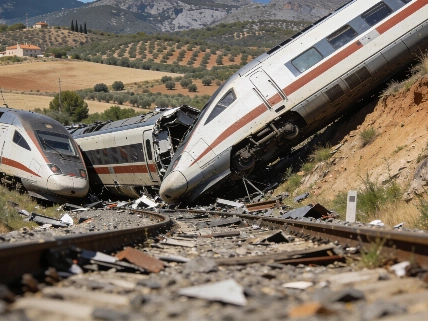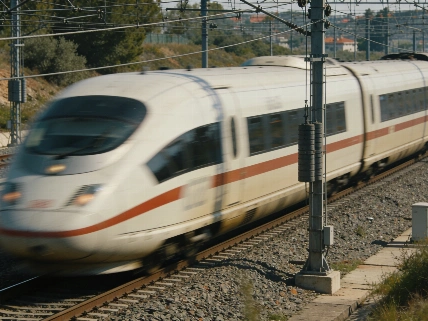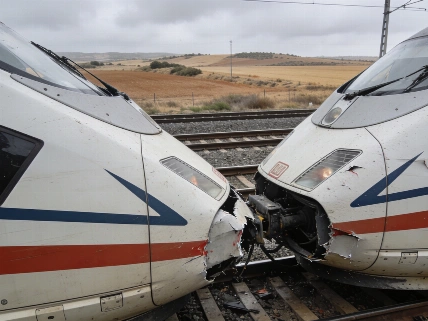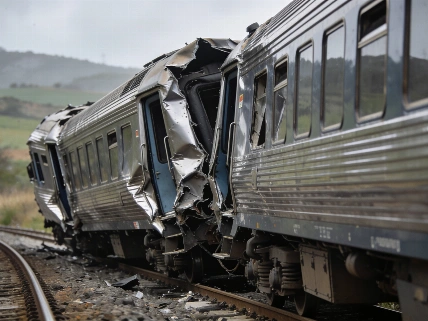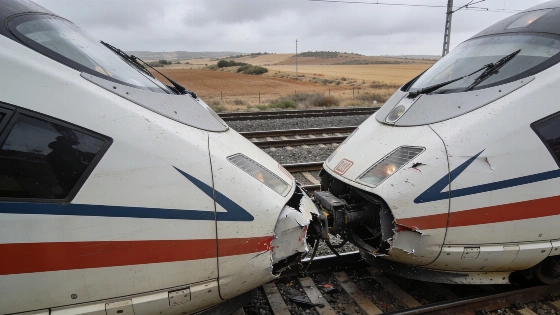
Her parents had dropped Marta Shahbazi at Madrid’s Atocha station before she boarded the AVE for Huelva. The 41-year-old scientist was travelling in carriage 8 to receive an award when the train crashed near Urda, in Toledo, on 28 October. The collision involved a Renfe AVE service and an Iryo train on Spain’s Madrid-Seville high-speed line.
At the time, her family had no information about her whereabouts. They went to the crash site to look for her, but her brother said they could not find her among the injured passengers and people being moved from the scene. Relatives also searched hospitals for survivors with less serious injuries and filed a report with the Guardia Civil. Shahbazi’s parents provided DNA samples at about 20:00 on Wednesday to help identify recovered remains. Her family was told the identification process could take time, and officials would contact them if she was among the recovered bodies.
The search was part of the wider effort by relatives to establish which passengers had survived the crash, as described in coverage of families searching. The casualty toll shifted as rescue and identification work continued. Authorities first reported at least 64 deaths; Interior Ministry figures later reached 74. The presidency and Transport Ministry subsequently revised the figure to 69. Euronews reported more than 180 people injured, including 18 described as very seriously injured. Castilla-La Mancha president Emiliano García-Page said at least 15 people were seriously injured and more than 50 others were hospitalized with less severe injuries.
Spanish authorities opened an investigation into the collision. ABC News reported that investigators were examining an order described as “inexplicable” and probing its cause. The investigation was still underway as casualty figures changed and officials continued identifying victims.
Shahbazi is a mother of two children, aged three and seven, and leads a research group at Cambridge’s MRC Laboratory of Molecular Biology. She was travelling from Madrid toward Huelva and was reported to be in carriage 8; fellow León researcher Tamara González Costa was also reported to be in the same carriage. Her brother Carlos described her as warm and hardworking in a statement reported by ABC. He also accused the government and public institutions of incompetence and corruption, saying they had affected her life brutally.
Her career began at the Universidad Autónoma de Madrid, where she earned a biology degree and a master’s in molecular biomedicine with the highest marks in her year. She later completed a doctorate at the Centro Nacional de Investigaciones Oncológicas, studying how epidermal stem cells preserve their shape and integrity, according to the Sociedad Española de Investigadores en Reino Unido. She then pursued postdoctoral research at the University of Cambridge, studying embryo morphogenesis during implantation.
At Cambridge, she developed a system to study human embryos in vitro beyond implantation. In 2020, she began leading her own group at the Medical Research Council (MRC) Laboratory of Molecular Biology, focusing on early human development and the cellular processes involved in implantation.
Her work includes three-dimensional stem-cell models, including embryonic spheres and placental organoids, used to investigate embryonic and extra-embryonic development. She has also taken part in UK discussions about the regulation of human embryo research and worked with IVF clinics and biotechnology companies.
Her awards include the 2019 3Rs Prize for research with the potential to replace and reduce the use of mice in developmental biology. She also received a Suffrage Science Award supported by the MRC Laboratory of Medical Sciences (LMS). In 2024, she joined the EMBO Young Investigator Programme.
The award she was due to collect in Huelva recognized her contribution to research into the earliest stages of human development. It was presented by the Sociedad Española de Biología para el Desarrollo.