On July 22, 2026, the Portuguese town of Caminha will once again turn its historic center into a living tableau of the Middle Ages. For five days, from Wednesday through Sunday, Caminha Medieval 2026 will bring visitors into the atmosphere of a period when trade routes shaped communities along the Atlantic coast.
This year’s edition is themed “Das Terras do Norte às Rotas do Mar” and focuses on “O Comércio na Idade Média.” Its programme draws on Caminha’s trading heritage, using historical recreation to explore the exchanges and crafts associated with medieval commerce and daily life.
Medieval Markets and Living History
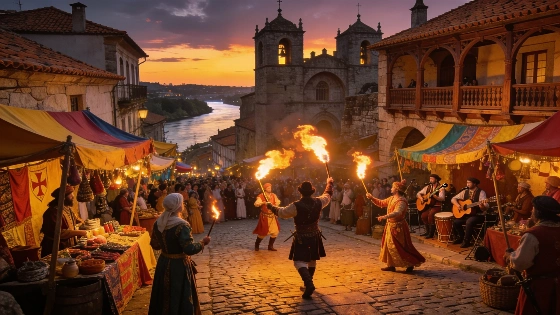
Throughout the festival, Caminha’s cobbled streets will be lined with stalls run by costumed merchants and artisans, offering handmade crafts and traditional foods, alongside demonstrations of traditional trades. Reenactors and local residents will bring to life the exchanges and rituals that evoke the town’s commercial past.
Beyond the market, the programme features open-air theatre and live music, with processions leading into fire performances. Visitors can explore historical camps and sample medieval-inspired dishes, taking in the festival atmosphere in the town center.
Festival Schedule and Practical Details
The fair’s opening hours cover daytime and evening events. On July 22 and 23, festivities run from 18:00 to midnight. On Friday, July 24, the programme continues until 01:00; on Saturday, July 25, it runs from 11:00 to 01:00. On the final day, Sunday, July 26, the fair is open from 11:00 to 23:00.
Caminha’s proximity to Galicia makes it accessible to visitors from across the border, including the Rías Baixas and Baixo Miño regions. The town lies across the Miño River from A Guarda in Pontevedra. Drivers can travel via Goián and continue along Portugal’s N-13 towards the center. River ferries also connect Caminha and A Guarda, with crossings dependent on tides and weather. Pilgrims on the Portuguese Coastal Way also use the route.
Tradition Meets Contemporary Culture
With its focus on commerce and daily life, Caminha Medieval pairs historical recreation with entertainment for visitors of different ages. Markets and performances, including craft demonstrations, bring the festival’s theme to life throughout the five-day programme.
Interest in adapting historic sites for cultural events is also evident elsewhere on the Iberian Peninsula. In Segovia, the reported change of Pedraza Castle into a year-round arts venue, involving Santiago Segura and José Mota, reflects efforts to give historic spaces new cultural roles. Details are available in this report on the cultural revival of Pedraza Castle.
Caminha Medieval 2026 offers five days of markets and live crafts, with performances and evening fire shows in a historic setting close to the Spanish border.