Cantabria’s car market is pulling far ahead of the Spanish average, with passenger vehicle registrations up 18.1 percent this year. But behind the headline, commercial and industrial vehicle sales tell a different story.
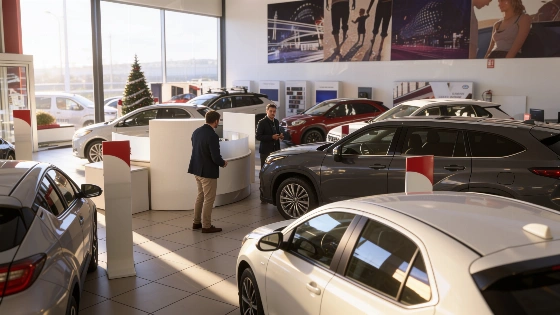
New cars are everywhere in Cantabria. In the first nine months of the year, 7,591 passenger cars and SUVs hit the roads. That’s an 18.1 percent jump, according to Anfac, Faconauto, and Ganvam. Spain as a whole managed just 6.7 percent growth in the same period. Cantabria is moving fast.
September was even more dramatic. Dealers sold 970 new cars, up 26 percent from last year. Spain’s national market grew by 10.2 percent in the same month. The gap is clear. Industry sources, including ANFAC and sector reviews, confirm that the Spanish passenger car market grew by about 6.3 to 6.7 percent from January to September 2026. Cantabria’s numbers are well above that.
By the end of August 2026, the Spanish passenger car market had nearly returned to pre-pandemic volumes, with around 818,000 new vehicles registered year-to-date.
The picture changes with commercial vehicles. Light commercial vehicle sales in Cantabria rose 14.2 percent in the first three quarters, reaching 908 units. That’s more than double the national growth rate of 6.3 percent. But September flipped the script. Sales dropped 46.1 percent to just 69 units. The rest of Spain saw a tiny increase of 0.4 percent.
Industrial vehicles are struggling even more. Cantabria registered 248 industrial vehicles so far this year, down 8.8 percent. Spain’s industrial vehicle market grew by 13.2 percent in the same period. September was rough. Only 21 industrial vehicles were registered in Cantabria, a 36.4 percent drop from last year. Nationally, the market grew by 5.6 percent.
Buses offer no comfort. Only 24 buses were registered in Cantabria in the first nine months, down 11.1 percent from last year. Ten of those sales happened in September. That’s a 28.6 percent fall compared to the previous year. Meanwhile, Spain as a whole saw bus registrations rise by 8.3 percent.
Sales of electrified vehicles in Spain surged by 27.4% in September 2026, and the share of electric vehicles in the EU has reached parity with gasoline cars, though Spain still lags behind the European average.
The numbers tell a simple story. Private car demand in Cantabria is booming. Commercial and industrial vehicles are not keeping up. Across Spain, those sectors are steady or growing. In Cantabria, they are falling behind. This split hints at a shift in the region’s economy. People are buying cars, but businesses are holding back on transport investment.
Spain’s auto market has seen big changes lately. Electric vehicles are breaking records. Charging networks are growing, as reported by sector sources. But Cantabria’s latest figures show something else. The hunger for new cars is real, but the weak sales in commercial and industrial vehicles point to trouble for local businesses and logistics.
For Cantabria, the facts are plain. The car market is strong. Commercial and industrial vehicle sales are falling fast. If this gap stays, it could reshape transport and the local economy. The data is clear. Cantabria’s auto market stands at a crossroads. What happens next depends on how businesses and policymakers respond.