Thousands of car lifts now operate in Spanish buildings where ramps are impossible. These hydraulic platforms move vehicles between floors, demanding strict maintenance and reshaping how city dwellers park.
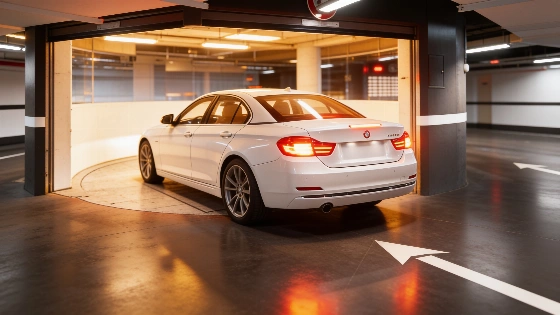
In Spain’s city garages, cars don’t always drive up or down. Sometimes, they vanish behind a steel door and reappear on another floor. That’s not science fiction. It’s daily life for up to 10,000 car lifts now running across the country. The reason is simple: there’s just not enough space in urban buildings.
Traditional ramps take up too much room. Hydraulic platforms move cars straight up or down, letting developers fit parking into plots where every meter matters. This isn’t a luxury. It’s a must-have for new apartment blocks on small lots and for industrial sites that need to move heavy vehicles or goods between levels. FEEDA, the Spanish elevator federation, told independent media that the main reason for the car lift boom is the lack of space in crowded cities. Ramps just don’t fit in many new buildings.
Platform-type car lifts are especially popular in private homes and facilities where vehicles or heavy goods need to be moved between levels without ramps.
José Carlos Frechilla Fernández, FEEDA’s director, draws a clear line. There are two main types. Full-cabin car lifts let drivers and passengers ride inside the car as it moves. Platform lifts only move the car. People wait outside. Platform lifts are common in high-end homes. Some disappear into the ground, hidden in the garden or driveway when not in use. Spanish law treats these lifts differently. Full-cabin lifts follow the same rules as passenger elevators. Platform lifts are regulated more like industrial machines, with their own rules for setup and maintenance. Recent official guidelines confirm this split.
Capacity matters. Most car lifts can handle at least 3,000 kg. Some take even more. The law sets minimum sizes: 2.4 meters wide and 5.5 meters long. The best setups go up to 2.8 by 6.5 meters. These numbers aren’t random. They make sure big cars fit and that doors can open safely so people can get out. FEEDA highlights these technical standards in industry publications. They’re key for safety and for fitting larger vehicles.
Rules are strict. Car lifts face the same legal checks as passenger elevators. Full-cabin lifts need monthly maintenance and a technical inspection every four years. That’s set by Real Decreto 355/2024 and the Código Técnico de la Edificación. Platform lifts don’t need the same technical inspection by law, but they still get regular checks—monthly or at least every three months. Many building owners hire an OCA to inspect platforms every four years anyway, just to be safe. Independent reports referencing FEEDA confirm that the new ITC AEM 1 regulation, starting July 1, 2024, brings these requirements to car lifts with cabins, putting them on par with other elevators.
For platform car lifts, formal technical inspections are not mandatory, but monthly or at least quarterly checks are recommended. Additionally, a four-year review by an accredited body is advised to enhance safety, even though it is not strictly required by law.
It doesn’t matter what you drive. Petrol, electric, van, or motorcycle—the same standards apply. The only limits are the lift’s size and weight rating.
Some setups go further. The Teatro Real in Madrid has a platform that can lower a full trailer truck 20 meters underground. The Gran Vía 48 garage uses robots to store 320 cars on eight underground levels. Five delivery cabins keep cars moving. Cities like Valladolid and Vigo have similar automated garages. Spanish engineers are rethinking city parking from the ground up.
But there’s a catch. Ramps need almost no upkeep and use little energy. Lifts are different. They need constant maintenance and steady power. The convenience of vertical parking comes with ongoing costs and strict safety routines.
Spanish cities keep getting denser. Parking gets tighter. Lifts aren’t just for show anymore. They’re a real fix for a problem that’s not going away. You can see the change in new buildings. Architects and developers now plan for vertical movement, not long ramps. The shift is clear.
Car lifts are changing Spanish urban life. It’s not just about squeezing in more cars. It’s about adapting to crowded cities, where every centimeter counts and new ideas are needed. As rules get tougher and demand rises, car lifts are set to become a normal part of Spain’s buildings. They’re reshaping how people think about parking, convenience, and the value of space.