Leire Díez’s Agendas Reveal Villarejo’s Influence Network Over Spanish Judges. The Leire Díez case has uncovered details about attempts to influence judges and prosecutors. Recordings mention the names of high-ranking officials and details of agreements with Villarejo. The investigation is ongoing.
The investigation into the Leire Díez case has revealed new details about attempts to control Spain's judicial system. According to El PAÍS, the inquiry uncovered personal notes and audio recordings kept by the former PSOE employee, following the example of ex-commissioner José Manuel Villarejo. These materials indicate that Díez not only studied Villarejo’s methods but actively used them to gather information on judges, prosecutors, and key figures in the country’s judiciary.
Documents found in Díez’s possession contain detailed references to judges of the Supreme Court, the National Court, and the anti-corruption prosecutor's office. Special attention was paid to what she called “robe control”—an expression Díez used to describe attempts to influence the decisions of judges and prosecutors. Among the main subjects of interest were figures such as Carlos Lesmes, former president of the Supreme Court; judges Manuel Marchena and Pablo Llarena; as well as prosecutors Dolores Delgado and Javier Zaragoza.
The investigation, led by National Court judge Santiago Pedraz, established that there was an informal agreement between Díez and Villarejo. According to El PAÍS, Díez gained access to Villarejo’s archives, including his personal diaries and audio recordings, and in return, may have assisted him with his legal issues. The records also mention the 'Badajoz' and 'OPA BBVA-Sabadell' cases, as well as several well-known politicians, including Francisco Martínez, María Dolores de Cospedal, Ignacio López del Hierro, and Mariano Rajoy.
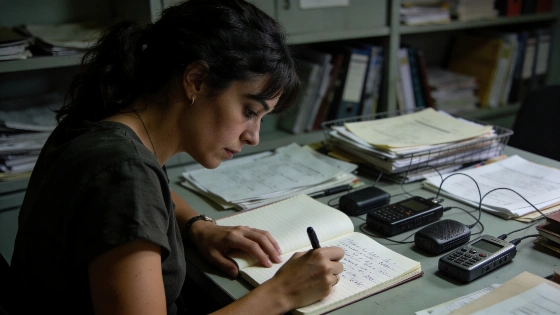
The case materials note that Díez recorded details of conversations, indicating the exact time and the names of participants. Particular attention is given to notes on the “Lesmes theory”—an approach to controlling judges through a system of rewards and punishments. Among the strategies discussed were attempts to influence disciplinary proceedings against judges, as well as plans to interfere in specific cases, for example, the case against the brother of Prime Minister Pedro Sánchez.
The investigation also revealed Díez’s interest in the work of the Supreme Court’s third chamber, where she analyzed the actions of judges involved in overseeing the activities of the CNI and handling administrative disputes. The notes mention possible illegal payments to judges and prosecutors, as well as efforts to monitor their connections with politicians and colleagues.
According to El PAÍS, the Villarejo materials formed the basis for a large-scale investigation that began back in 2017 and is still ongoing. The Leire Díez case has already been divided into several branches, some of which remain classified. Not only recordings and audio files play an important role in the investigation, but also messenger correspondence and documents gathered by the UCO unit of the Civil Guard.
For reference: José Manuel Villarejo is a former police commissioner involved in several high-profile cases of corruption and illegal surveillance. The National Court is one of Spain's key courts, handling cases of terrorism, corruption, and major crimes. The Supreme Court is the country's highest judicial authority. The Leire Díez case highlights the complexity and scope of issues related to the influence on the judicial system and political processes in Spain.