The Catalan government has commissioned a major renovation of Palau de Pedralbes. The project aims to create a nearly zero-emission building and add a new welcome garden. The palace will serve as the cabinet's second headquarters.
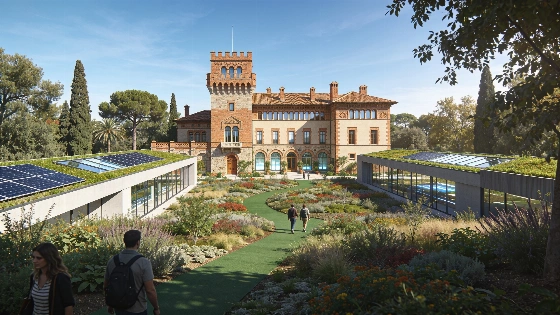
The Catalan government has taken a decisive step toward transforming Palau de Pedralbes in Barcelona into a modern, sustainable government facility. Authorities have awarded the contract for the palace's renovation to a joint venture between F87 arquitectura ingeniería facilities SLP and Brullet-de Luna i Associats SLP. The winning proposal, named Eje Palatino, sets out to create a new entrance garden and ensure the building operates with almost zero emissions.
Under the terms of the contract, the architectural team now has nine months to develop the full project plan. The goal is to establish Palau de Pedralbes as the cabinet's second official headquarters, reflecting a broader push for sustainability in public buildings across Catalonia. The project emphasizes environmental responsibility, with a focus on energy efficiency and green design.
The planned renovation will not only update the palace's infrastructure but also reshape its surroundings. The new garden is intended to serve as a welcoming space for visitors and staff, enhancing both the functionality and the public image of the site. According to El País, the selection process prioritized proposals that combined architectural innovation with ambitious sustainability targets.
This move comes as the Catalan executive continues to invest in modernizing its institutional spaces. The decision to prioritize zero-emission standards aligns with wider European trends in public sector construction. The project at Palau de Pedralbes is expected to set a benchmark for future government renovations in the region.
For context, recent political developments in Catalonia have kept the spotlight on government decisions and their impact on regional stability. For example, ongoing debates about leadership and governance have been highlighted in reports such as this analysis of Catalan demands and their influence on national politics: how Catalan parties are shaping the national agenda.
Palau de Pedralbes, originally built in the early 20th century, has served various institutional roles over the decades. Its upcoming transformation into a sustainable government hub reflects both the historical significance of the site and the evolving priorities of Catalan authorities. The project is part of a broader trend in Spain and Europe to retrofit heritage buildings for modern use while meeting strict environmental standards. As the renovation moves forward, attention will focus on how the palace balances its architectural legacy with the demands of contemporary governance and sustainability.