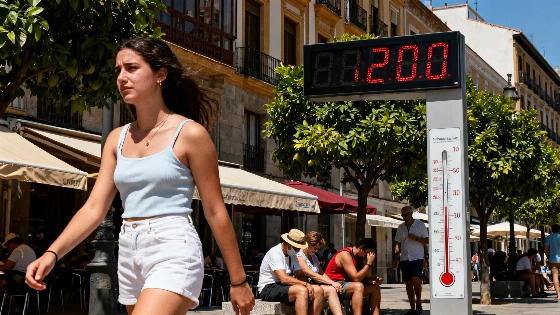
Catalonia is under its third heatwave this summer. Authorities have restricted entry to key natural areas and placed 72 municipalities on maximum fire alert. Emergency services urge caution as temperatures soar.
Emergency measures have been activated across Catalonia as the region enters its third heatwave of the summer, with authorities warning of extreme temperatures and a surge in wildfire risk. The Catalan Meteorological Service (Meteocat) expects the current episode of intense heat to persist at least until Thursday, with temperatures already climbing above 40°C in Lleida and further increases forecast midweek.
Rural Agents have placed 72 municipalities across 14 comarcas under maximum fire risk, restricting access to several protected natural areas, including Montsec d’Ares, Montsec de Rubies, La Ribera Salada, Baronia de Rialb, Montserrat, Sant Llorenç del Munt i l’Obac, Montsant, and El Montmell-Marmellar. The restrictions follow a night in which minimum temperatures rose sharply in western Catalonia, ending a brief respite from the heat. Authorities have called for heightened vigilance, especially as a mass of North African air carrying suspended dust is expected to intensify conditions.
Firefighters have already responded to multiple outbreaks over the weekend, notably in Camarasa (Lleida) and Mont-roig del Camp (Baix Camp), where rapid intervention prevented escalation. However, the risk remains acute, with nearly 200 additional municipalities classified as having very high fire danger. The president of the Generalitat, Salvador Illa, has publicly urged residents to follow emergency service recommendations, avoid outdoor activity during peak sun hours, and exercise extreme caution with fire. Òscar Ordeig, the regional minister for Agriculture and Livestock, has reminded forest owners of their obligation to maintain management plans to help prevent wildfires, emphasizing the need for administrative support to facilitate compliance and promote sustainable economic activity in rural areas.
Health concerns are also mounting. The Mossos d’Esquadra have launched an investigation into the death of a 64-year-old seasonal worker from sub-Saharan Africa, who died after suffering a suspected heatstroke while harvesting fruit in Seròs (Lleida). The incident occurred just as Catalonia concluded its second heatwave of the summer, during which the Emergency Medical System (SEM) treated 295 people for heat-related conditions. Employers’ associations Foment and Pimec are urging companies to adopt preventive measures for workers exposed to high temperatures, noting that heatwaves are becoming more frequent and severe. According to Cèsar Sánchez of Foment, heat is now a persistent occupational hazard, while Sílvia Miró of Pimec points out that extreme heat can no longer be considered an exceptional event.
As Catalonia adapts to increasingly severe summer conditions, the impact of heatwaves is drawing attention to broader social and economic vulnerabilities. Recent analysis highlights disparities in how different communities cope with extreme heat, such as the significant gap in air conditioning access between low- and high-income households in Barcelona, as reported in a recent study on heatwave inequality. These findings underscore the growing need for targeted public health and safety measures as climate patterns shift.
Heatwaves in Spain have become more frequent and intense over the past decade, with 2026 already seeing record-breaking temperatures in several regions. The government continues to update emergency protocols and invest in public awareness campaigns, but the combination of rising temperatures, drought, and increased fire risk presents ongoing challenges for both authorities and residents. The situation in Catalonia serves as a stark reminder of the urgent need for coordinated action to protect vulnerable populations and natural landscapes from the escalating impacts of extreme weather.