Catalonia has attracted more than €10 billion from the EU's recovery fund. The impact is estimated at 6.2% of the region's GDP. Authorities expect the total to rise as Spain allocates remaining funds.
Catalonia has surpassed €10 billion in funding from the European Union's Next Generation EU recovery program, according to the latest figures from the Generalitat's Department of Economy and Finance. With the first phase of the EU's unprecedented investment and reform initiative nearing its conclusion, the region stands out for its ability to attract resources aimed at post-pandemic recovery and advancing green and digital transitions.
Data released by the Generalitat indicate that, as of March 31, Catalonia had received €10.18 billion. This figure is expected to grow, since Spain still has nearly €22 billion left to allocate from the overall fund, based on government statistics. The funds have reached Catalonia through several channels: direct government grants to Catalan entities (€494 million), public calls such as the digital kit (€4.6 billion), sectoral conferences between the central government and autonomous communities (€4.08 billion), and other awards (€1.01 billion). Of the money transferred via sectoral conferences, the Generalitat has already published calls and tenders for the full amount, with 78% of those funds—€3.24 billion—already committed.
An interim report from the University of Barcelona, presented this Friday, estimates that the European funds will have an impact equivalent to 6.2% of Catalonia's GDP. The analysis suggests a multiplier effect of 1.5, meaning the €10 billion injection could ultimately generate €15 billion in economic activity. The effects are expected to extend through 2027, particularly due to long-term investments in infrastructure, research, and development.
Research, development, and innovation have emerged as the primary beneficiaries, receiving €1.75 billion, followed by services (€1.33 billion) and industry (€933 million). Infrastructure projects related to mobility, energy, and water have absorbed €3.92 billion. Social and cultural organizations have secured around €1.32 billion, with €574 million specifically allocated to the social economy sector.
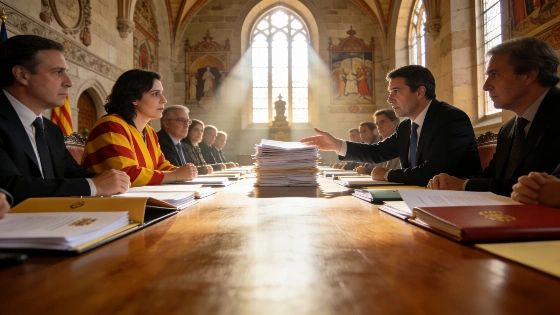
At an event held at the Palau de Pedralbes, Generalitat President Salvador Illa highlighted Catalonia's leadership in securing Next Generation EU funds, emphasizing the region's proactive approach. Economy and Finance Minister Alícia Romero also participated, underlining the strategic importance of these investments for Catalonia's future.
Spain and Italy played a pivotal role in convincing other EU members, particularly from the north, to support the launch of the recovery plan in 2020. Since then, Brussels has maintained strict oversight, requiring regular progress reviews from recipient regions. Some reforms, such as changes to the labor market, have produced immediate and visible results, notably reducing temporary employment. Other impacts are less direct and will require further assessment over time.
The allocation of EU funds has become a central issue for regional governments, with Catalonia's approach drawing attention for its scale and focus. The region's experience with social investment is also notable, as seen in initiatives like the €30 million program to identify families missing out on social aid, which was recently detailed in a report on targeted welfare expansion.
For context, the Next Generation EU fund is the largest stimulus package ever financed by the EU, with Spain among the main beneficiaries. The program's dual focus on economic recovery and structural reform has shaped national and regional policy since 2020. As the current phase draws to a close, attention is turning to the long-term effects of these investments and the challenges of ensuring that remaining funds are distributed efficiently and transparently.