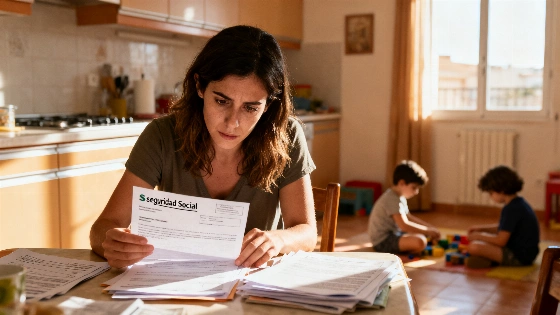
The Catalan government will invest €30 million to identify families in vulnerable neighborhoods who are not receiving social benefits. The plan aims to add 20,000 people to the welfare system by 2029. Authorities hope to reduce child poverty rates.
The Catalan government is launching a €30 million initiative to identify and support families in the region's most deprived neighborhoods who are not accessing social benefits, despite being eligible. The program, set to begin in September, targets households with children who have fallen through the cracks of the welfare system, often due to lack of information or bureaucratic hurdles.
According to information obtained by EL PAÍS, the project—called Barris per Créixer—will focus on neighborhoods in 20 to 30 municipalities selected based on the Territorial Socioeconomic Index (IST) from the Catalan Institute of Statistics (Idescat). The final list of participating areas is still being finalized, but priority municipalities have already been identified. The Department of Social Rights and Inclusion expects to bring around 20,000 new beneficiaries into the social assistance system over the next three years.
Recent Idescat data from 2023 shows that Catalonia has 110 census groupings—territorial units of 5,000 to 20,000 residents—with a socioeconomic index more than 20 points below the regional average, spread across 44 municipalities. As a result, 490,900 children and adolescents in Catalonia—36.5% of the total—are at risk of poverty or social exclusion, according to the Generalitat. The government believes that many families remain invisible to social services and are unaware of the support available to them.
One of the main challenges, as highlighted by Social Rights Minister Mònica Martínez Bravo, is the so-called 'non take up' phenomenon, where eligible individuals do not claim benefits. Department estimates suggest that 25–30% of those entitled to the guaranteed citizenship income, 67% of potential minimum vital income recipients, and 79% of those eligible for the child support supplement are not receiving these benefits.
The new program will deploy 231 professionals to work alongside municipal social services. Once families are identified, they will receive assistance in navigating the application process for benefits such as the guaranteed citizenship income (RGC) and the minimum vital income (IMV), as well as referrals to other public resources, including mental health and child support services. The government stresses that there are no budgetary limits for these benefits, as both the IMV (state-funded) and the RGC are recognized as subjective rights for those who qualify.
Formal approval of the program by the Consell Executiu and recruitment of implementation teams are expected in the coming months. The Generalitat will also negotiate with participating municipalities and finalize operational details. Social services are set to be the main entry point for beneficiaries, though other referral methods may be used. The effectiveness of the program will be measured by the number of new beneficiaries, improvements in child well-being, families' sense of economic security, and educational outcomes. If successful, the government plans to expand the initiative beyond 2029.
For context, Catalonia has one of the highest child poverty rates in Spain, with nearly four out of ten minors at risk of exclusion. The guaranteed citizenship income (RGC) and minimum vital income (IMV) are key tools in the fight against poverty, but complex procedures and lack of awareness have limited their reach. The Barris per Créixer program aims to close this gap by proactively seeking out those who have been left behind by the system.