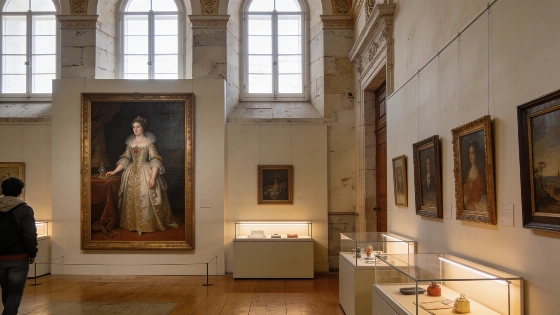
After drawing 150,000 visitors in Seville, Cayetana. Grande de España opens at Madrid's Palacio de Liria. More than 200 objects trace the duchess's art, private life and work within the Casa de Alba.
On 1 October 2026, the doors of Palacio de Liria in Madrid will open to Cayetana. Grande de España. The exhibition runs until 31 January 2027. It brings together more than 200 objects after attracting 150,000 visitors at the Palacio de las Dueñas in Seville. MujerHoy reported that the project marks the centenary of Cayetana Fitz-James Stuart's birth. Its focus is wider than her title as XVIII Duchess of Alba. It follows her artistic passions, personal relationships and unusual freedom.
Palacio de Liria was part of Cayetana de Alba's life. That changes the way the exhibition reads. The building is not only a venue. It is part of the family history around her. The display places her private choices beside the care of one of Spain's major aristocratic collections and the palace's continuing public life.
The Madrid exhibition commemorates the centenary of Cayetana Fitz-James Stuart’s birth and is open from 1 October 2026 to 31 January 2027.
Seven sections follow her path from childhood, when she was known as "Tanuca," to her succession as Duchess of Alba at 27. They look at the influence of her father, Jacobo Fitz-James Stuart, and at her work as a collector, patron and painter. Opera, cinema, flamenco and fashion also have their place. Other sections cover her international profile and charitable work. El Mundo described the same broad approach. The exhibition moves beyond genealogy and into the cultural worlds Cayetana joined.
The research took more than three years. Eugenia Martínez de Irujo and Cristina Carrillo de Albornoz led the work with the Fundación Casa de Alba team. The foundation organised the exhibition. It presents the result as a family project with a public cultural purpose.
Martínez de Irujo is Cayetana's daughter and one of the curators. She has built the display around the woman behind the title. The selection examines Cayetana's view of the world, her passions, her affections and the independence with which she lived. Carrillo de Albornoz focuses on her cosmopolitan outlook and her relationship with the heritage of the Alba family.
The Madrid version adds a section on the reconstruction of Palacio de Liria after its destruction in 1936, highlighting Cayetana’s participation in restoring the family residence. According to EFE’s report published by Infobae, this historical material expands the exhibition beyond the version previously shown in Seville.
The family history is not just a backdrop. The exhibition looks at Luis Martínez de Irujo's role in modernising the Casa de Alba. It also has a section on the 70th anniversary of the reconstruction of Palacio de Liria. Duke Jacobo began the work. Cayetana and Luis completed it. The Madrid display links that history to the way Cayetana protected, modernised and opened up the legacy she inherited.
Visitors will see artworks beside photographs, correspondence, documents, dresses and personal belongings. Telemadrid reported that the display fills six rooms. Some objects have never been shown publicly before. The material brings the focus closer to the person who inherited the Casa de Alba's responsibilities and helped take it into a wider international cultural sphere.
General admission costs €20. It includes access to the palace and its historic and artistic collection. Discounts include family packages and options for people born or resident in Madrid. Entry to the exhibition is free on Mondays at 10.00.
The palace opens on Mondays from 10.00 to 12.45. From Tuesday to Sunday, hours are 10.00 to 12.45 and 16.00 to 18.00. The building closes at 19.00. These hours tie the anniversary exhibition to an active historic residence and its permanent collection.
The exhibition keeps the public title beside the private character. That is its strength. Palacio de Liria's art and history become easier to read through the life of the woman who inherited them. Cayetana's legacy came from what she received, but also from the way she chose to live.