At 9am, electricity demand was 28,785 megawatts, compared with Red Eléctrica’s estimate of 31,301 MW. The reported fall was 10.8% against the same time on the previous Wednesday, offering one measurable indication of activity during the general strike. At 8am, demand was 27,102 MW, more than 9% below Red Eléctrica’s forecast and nearly 3,000 MW below the equivalent Wednesday a week earlier. By 10am, it had risen to 29,588 MW, still 4,108 MW, or 12.19%, below the forecast of 33,696 MW.
The reading was also 8.2% below the previous day. On Tuesday, demand reached 31,378 MW, against an estimate of 31,633 MW. A week earlier, on Wednesday 4 November, it stood at 32,202 MW, compared with an estimate of 32,394 MW.
Those figures provide context, but they do not show how many people joined the stoppage. Electricity demand also responds to temperature and industrial activity; forecasting error and the differing electricity intensity of economic sectors matter too. The comparison with the 2012 general strike uses a different time and baseline: the 19.98% decline recorded on 29 March 2012 was measured at 5pm against demand forecast by Red Eléctrica.
The system-wide demand measure is separate from a local supply interruption, such as the central Madrid outages reported separately. Sunday offered a rough point of comparison: demand was just over 22,000 MW at 9am on 8 November, then rose above 28,000 MW at points during the day.
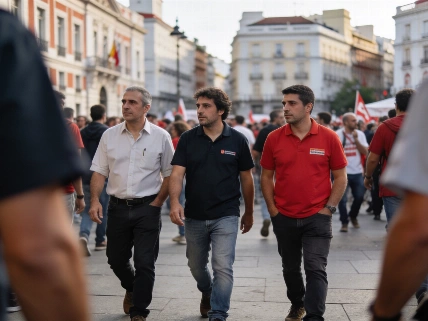
The 24-hour stoppage began at midnight on 11 November. It was the first nationwide general strike jointly called by Spain’s two largest unions, CCOO and UGT, in 14 years. The unions backed the action over housing costs and wages, with tenants’ associations and other labour organizations also supporting it. Minimum services were arranged for transport and postal services, as well as energy and hydrocarbons.
CEOE president Antonio Garamendi described early take-up as limited in remarks on El Programa de AR, saying activity was broadly normal. The employers’ association said minimum services were being met, while pickets affected access to the Port of Algeciras and to some industrial estates and roads. ATA, the self-employed association, estimated that 90% of sole traders had not joined. Union representatives called the mobilisation successful, though their 9am press conference described participation as uneven.
CCOO and UGT reported participation of 90% in the automotive and port sectors, 85% in meat processing, 82% in waste collection and 75% in energy. These were union-reported estimates for individual sectors, not a national participation count; minimum-service requirements also remained in place in essential sectors.
Unai Sordo, CCOO’s general secretary, said the strike was having a significant effect, particularly in unionised areas and workplaces. Speaking to Cadena SER, he also said participation varied across Spain, citing a divide between urban and tourist areas and rural areas.