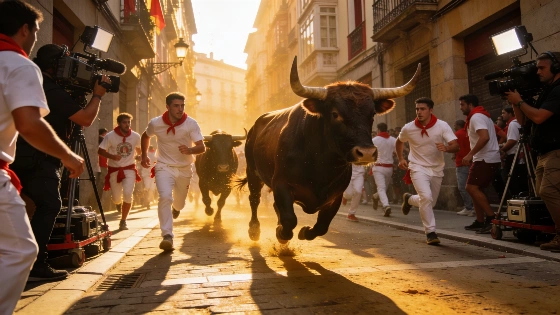
Cebada Gago bulls drove the second San Fermín 2026 encierro in Pamplona at high speed this morning. Known for their unpredictable and demanding nature, the bulls charged through the city’s historic streets, drawing thousands of runners and onlookers. Tension ran high throughout. A report by Orsolya Gazdagi for El Caso and ElNacional.cat identified at least one horn injury during the run.
At exactly 8:00, the traditional rocket signaled the start, sending the bulls racing from Ayuntamiento square through Mercaderes and Estafeta along the 875-meter route to the bullring. The herd remained tightly packed throughout, completing the course in 2 minutes and 26 seconds. Runners slipped and fell, as usual. The reported horn injury complicates descriptions of the event as having passed without serious incidents. The previous day’s faster run left five people with contusions, three of whom required hospital care.
Preparation for the encierro began hours earlier. Starting at 4:00, the Policía Foral’s canine unit inspected the route to protect runners and spectators. By 7:55, participants had gathered for the traditional chant to San Fermín, seeking protection before facing bulls weighing between 555 and 610 kilos. Runners also used the occasion to show solidarity with various causes, adding a social dimension to the festival’s intensity.
RTVE provided live coverage, including a multicamera setup on RTVE Play that let viewers follow the action from multiple angles. The special program 'Vive San Fermín 2026' aired from 7:15 each morning on La 1, hosted by Ana Prada and Julian Iantzi, with Egoitz Txurruka and expert runner Teo Lázaro. The expanded coverage reflects growing interest in the festival, as highlighted in recent reports on the return of live bull runs and new broadcast features.
Cebada Gago’s bulls have a long-standing reputation for unpredictability, often breaking from the herd and targeting runners along the sides. The ranch is among those with the highest number of goring incidents, with over 55 injuries recorded during its participation in San Fermín. The reported horn injury during this run shows the risks runners face and the importance of preparation and vigilance.
The San Fermín festival remains one of Spain’s most iconic events, drawing international attention to a tradition marked by risk and spectacle. The encierros test participants’ courage and pose logistical challenges for city authorities and emergency services, while broadcasters must cover the action. Historical reporting by El País recalled the two deaths during Pamplona’s 1980 “domingo-negro” and described a 1983 encierro as highly dangerous. It also quoted a municipal warning that “no one is obliged to run” and that taking part entails risk. With each run, Pamplona balances celebration and safety while maintaining a centuries-old tradition that continues to evolve with new technologies and greater public-safety awareness.