Ceuta is experiencing growing unrest as protests erupt over the handling of the migrant crisis. The arrival of Minister Ángel Víctor Torres has intensified local frustration. Police and aid workers face daily challenges.
Ceuta has entered a period of heightened tension, with protests and public frustration escalating over the management of the ongoing migrant crisis. On Tuesday, the city saw a series of incidents that underscored the strain on its 84,000 residents, as both locals and authorities struggled to cope with the influx of migrants and the perceived lack of effective response from Madrid.
Throughout the day, the city’s fragile social fabric showed signs of fraying. Residents from all walks of life voiced a common sentiment: the situation has become unsustainable. Many pointed to the sudden arrival of thousands of migrants, who now spend their days wandering the city or waiting for food distributions, as a key source of pressure on local services and daily life.
At midday, Juan Jesús Vivas, president of the autonomous city, announced that Ceuta would join the Committee of the Regions in Brussels, a long-standing local demand. However, the news was met with muted enthusiasm, as many saw it as symbolic rather than a solution to the immediate crisis. Vivas also criticized the central government, questioning why warnings from intelligence services about a potential surge in arrivals were not acted upon and why Ceuta was not declared an emergency zone.
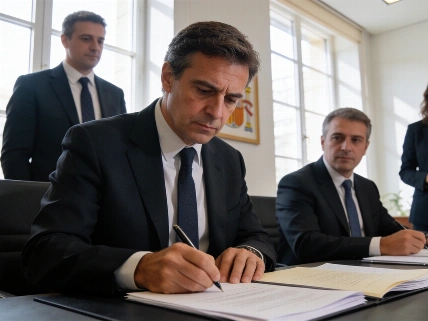
Later in the afternoon, a protest erupted as Minister Ángel Víctor Torres arrived in Ceuta. Demonstrators gathered near the government delegation building, voicing their anger with chants and jeers. The march, which began with around a hundred participants, grew as more residents joined along the route from Plaza de África to the border area and back to the city center. The protest reflected deep dissatisfaction with both local and national authorities.
Meanwhile, on the opposite side of the city, aid workers and police prepared for the daily distribution of food to the thousands of migrants who entered irregularly at the end of July. As evening fell, large groups gathered at El Trampolín beach to receive basic supplies. Police units were deployed to maintain order and protect Red Cross staff, following previous incidents that had raised safety concerns among municipal cleaning crews.
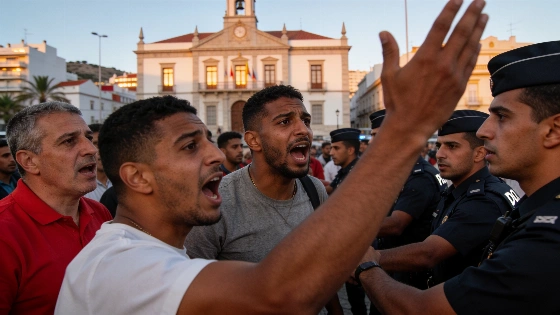
During the distribution, a minor incident escalated when a migrant began to pray outside the designated line, prompting a police response. The situation quickly deteriorated into a confrontation involving shouting, stone-throwing, and a brief clash that was eventually dispersed with batons and tear gas. Both police and migrants showed visible signs of fatigue and frustration, as expectations set by social media clashed with the reality on the ground.
Back in the city center, the protest swelled as more people joined, waving Spanish flags and wearing shirts with slogans defending Ceuta. The mood turned hostile outside the hotel where the minister was believed to be staying, with insults directed at officials and tension rising further when two Moroccan men inadvertently walked into the crowd. The situation briefly threatened to spiral before police intervened to protect those targeted.
Elsewhere, a man filming the protest was accused of being a “Moroccan spy,” leading to a confrontation that ended with police escorting him to safety. Overhead, a Guardia Civil helicopter tracked a fast-moving boat in the bay, a reminder of the region’s ongoing challenges with smuggling and irregular crossings. The city’s daily routine has been upended, with uncertainty now a constant presence.
Rumors circulated late into the night about the minister’s whereabouts, prompting protesters to move toward a local restaurant near the medieval walls. After an hour, the crowd dispersed, feeling their efforts were unfinished. Authorities expect further unrest, with new protests and tensions likely to flare at key locations such as the beach and government offices.
Ceuta’s current crisis highlights the complex interplay between local pressures, national policy, and European engagement. The city’s unique position—bordering Morocco and serving as a gateway to Europe—has made it a focal point for migration and political debate. As noted in a related report on political tensions in Madrid, such crises often expose deeper divisions and test the resilience of local communities. For more on how political controversies can intensify scrutiny of government actions, see this analysis of Madrid’s recent property dispute: Madrid leader’s remarks spark new political tension.
Ceuta’s experience serves as a stark example of the challenges facing Spanish border regions. The city’s demographic diversity, with three major religions and a large public sector workforce, adds layers of complexity to crisis management. The ongoing situation underscores the need for coordinated action and clear communication between local, national, and European authorities. As the city enters another day of uncertainty, residents and officials alike are bracing for further developments.