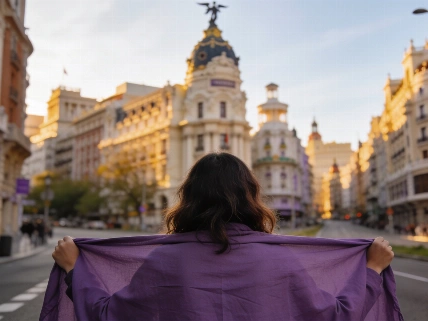
At the Plaza de los Reyes, demonstrators called on Spanish and European institutions to respond to the July border crisis. More than 2,000 people took part in the march organised by Mujeres Caballas, the supplied account says.
The procession set off at noon from the Murallas Reales and ended outside the Government Delegation. Participants called for respect for the territorial integrity of Ceuta and Melilla. Their demands also covered the Canary Islands. One chant declared, “Esta frontera también es europea” (“This border is European too”). Spain treats Ceuta as Spanish territory and part of the EU’s external frontier; Morocco does not recognise Spanish sovereignty over the enclave. Spanish Foreign Minister José Manuel Albares has described Ceuta and Melilla as external EU borders, with the Canary Islands also included, and called for European support in managing arrivals.
Many carried flags representing Ceuta and Melilla, alongside flags of the Canary Islands and Spain. People travelled from Granada and Sevilla; others came from Málaga. Juan Vivas, president of the City, and members of the regional government backed the demonstration.
Mujeres Caballas was formed after the mass entry into Ceuta on 30 July. The crossings took place on 30 to 31 July 2021, with people entering from Morocco by sea near the breakwater and through the El Tarajal border area. The episode came amid strained Spain-Morocco relations, after Spain admitted Polisario Front leader Brahim Ghali for medical treatment. Earlier, around 8,000 to 10,000 people crossed into Ceuta on 17 to 18 May 2021, during the diplomatic dispute surrounding Ghali’s treatment. The organisers said more than 100,000 people entered the city during the July border crisis. Spanish government reporting put the number at about 72,000, while a later National Police assessment estimated 100,000 to 125,000 and said the total could not be precisely established. The group had also organised a demonstration in Madrid on 25 October. A previous RUSSPAIN report put attendance at the Ceuta march at around 3,000 in earlier coverage.
Before the march began, organiser Elisabeth Muñoz said she was pleased with the public response and urged people elsewhere in Spain to join. In a statement translated from Spanish, she said: “Toda España tiene que saber que España está con Ceuta y que un caballa nunca se rinde,” rendered in English as “All Spain must know that Spain stands with Ceuta and that a caballa never gives up.” Muñoz said organisers had not yet been able to count how many participants had travelled from the mainland.