In just two days, more than 1,200 migrants disappeared from Ceuta’s makeshift camps. The rapid clearance came ahead of Spain’s snap elections and the King’s visit, raising questions about the timing and methods behind this sudden transformation.
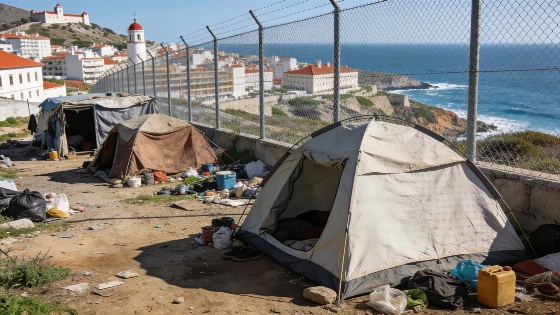
El Trampolín and Benítez beach look empty now. Not a single tent or shelter remains. In less than two days, Ceuta’s largest migrant camps were wiped out. Bulldozers flattened the makeshift huts. Crews hauled away 221,000 kilos of debris. The timing was no accident. The operation started just before Prime Minister Pedro Sánchez called for general elections. It finished less than two weeks before King Felipe VI and Queen Letizia’s visit.
For months, these camps were the face of Ceuta’s migrant crisis. Thousands crowded the beaches after the mass entry on July 30 and 31. Cruz Roja handed out meals every day. Earlier efforts to clear the camps failed. The problem stayed in plain sight. According to independent reports cited by Euronews and El País, the clearance at El Trampolín was not a single sweep. It began on October 4 near the desalination plant. The goal was to finish by October 15. Benítez beach had already seen earlier cleanups.
Authorities planned to install perimeter fencing after the cleanup to prevent new encampments from forming on the beaches.
This time, the plan worked. On Sunday, October 3, police and heavy machinery arrived together. They tore down huts made of sticks and plastic. By Monday, the camps were gone. The beaches looked completely different. The numbers were big. Todo Alicante and Ceuta Actualidad estimated 3,000 to 3,500 people lived in El Trampolín alone. That’s higher than some earlier counts.
But the real surprise was how many migrants left on their own. More than 1,200 chose to return to Morocco. Efe reported this wave of departures happened during the operation. Lawyers sent to the Centro de Atención Temporal de Extranjeros (CATE) at El Tarajal found no one to represent. Buses meant for 140 migrants left empty. Everyone had already chosen voluntary return. Spain’s Ministry for Territorial Policy said over 1,100 people were moved to official centers. Some Spanish media mentioned up to 900 voluntary returns to Morocco, but that number was not confirmed in official documents.
Just ten days before, Spain’s official in Ceuta, Ángel Víctor Torres, said voluntary returns were rising—about 150 to 200 per day. The pace changed fast during the cleanup. Police now walked migrants to the border. The process was more visible. National Police kept patrols to stop people from setting up new camps in the hills or on the beaches. Ceuta Actualidad reported that several government services took part. Police secured the area and managed the crowds. Heavy machinery broke down shelters. City crews cleared away belongings and trash.
After evacuation, migrants were directed along two main routes: by bus to the CATE identification center in El Tarajal or directly to the border for voluntary return to Morocco. Around ten buses were used in the operation, with authorities stating that the process was designed to determine eligibility for international protection or return.
Politics drove the urgency. Elections are set for November 29. The royal visit is close. The government faced sharp criticism for its handling of the crisis. A Sigma Dos poll cited by the original report found 82.2% of people thought the government had not done enough. Even more than half of PSOE voters agreed. The official timeline for clearing the camps was shaped by the King and Queen’s visit, set for October 13. Authorities set October 15 as the final deadline, according to Euronews.
By the time King Felipe VI and Queen Letizia arrive, the migrant camps will be gone. The city looks transformed. The message is clear. When politics are at stake, even the toughest problems can disappear overnight. Whether this fixes the real issues or just hides them is still up for debate. But the timing before the elections and royal visit is obvious.