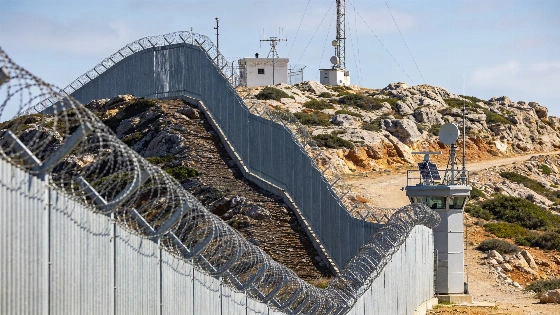
A mass entry of nearly 80,000 migrants into Ceuta has sparked a political storm. Conflicting accounts over intelligence warnings led to a key resignation. The government insists Spain can defend its borders and uphold international law.
Spain is facing a political crisis after nearly 80,000 migrants crossed into Ceuta, exposing sharp disagreements within the government over whether key intelligence warnings were ignored. The resignation of Gonzalo Sanz, chief of staff to the government’s delegate in Ceuta, has brought these divisions into the open.
The dispute centers on a WhatsApp message sent by a CNI (Centro Nacional de Inteligencia) operative to Sanz on July 29. The message warned of mass mobilization calls spreading on social media. This alert, now among 40 declassified documents, contradicts the delegate’s claim that there was no advance warning about the scale of the threat. Sanz says he passed on the warning, and his resignation has increased scrutiny of how the government handled the crisis.
"One of the CNI warnings referenced social media groups with a combined reach of up to 180,000 users discussing plans to cross into Ceuta."
— BBC
Óscar López, minister of Transformación Digital y Función Pública, has defended the government’s actions. Speaking on TVE, he said there was no information confirming a mass entry on this scale. He acknowledged that authorities receive regular alerts, but none pointed to an attempt involving 70,000 people. López insists Spain acted to defend Ceuta and Melilla and is able to protect its borders while respecting international law and human rights.
The release of the intelligence documents has led to accusations and counterclaims among officials. The government’s version of events is now challenged by evidence that warnings were communicated. Sanz’s resignation has raised questions about the chain of command and whether Spain’s border security protocols worked as intended. As a previous investigation showed, the dispute over the CNI alert has shaken confidence in the local administration and highlighted weaknesses in crisis management.
López continues to argue that Spain’s border defense is strong and that the government responded quickly to support Ceuta and Melilla. But the conflicting accounts and the loss of a senior official point to a lack of coordination at key moments. The incident shows the risks when intelligence warnings are not clearly acted on or passed up the chain. In the wider context of Spain’s migration challenges, the Ceuta episode has made trust in the system more fragile, especially when transparency and accountability are in doubt. The government’s claims of preparedness are now questioned in light of public evidence of missed signals and internal disagreement.
"According to Reuters and AP, the CNI’s warnings on July 29 included not only references to social media mobilization but also specific scenarios, such as crossing the border fence and swimming, and mentioned the use of Morocco’s Throne Day celebrations as a distraction. Earlier CNI reports from July 27 had already noted increased pressure on Ceuta and Melilla, with military intelligence warned of a high probability of a mass influx."
— Reuters and AP