Far-right leaders faced strong opposition in Ceuta after recent migrant arrivals. Local Muslim residents confronted anti-immigration activists, forcing them to leave. The incident highlights the city's unique social dynamics.
Ceuta has become the latest flashpoint in Spain’s ongoing debate over migration, as far-right figures attempting to stage anti-immigration protests were met with unexpected resistance from local residents. Following a recent mass entry of migrants into the autonomous city, prominent far-right leaders, including Alvise Pérez, Vito Quiles, Santiago Abascal of Vox, and members of the neo-Nazi group Núcleo Nacional, traveled to Ceuta aiming to capitalize on the situation. Their efforts, however, quickly unraveled as local Muslim residents, who make up a significant portion of the city’s population, confronted and rejected their presence.
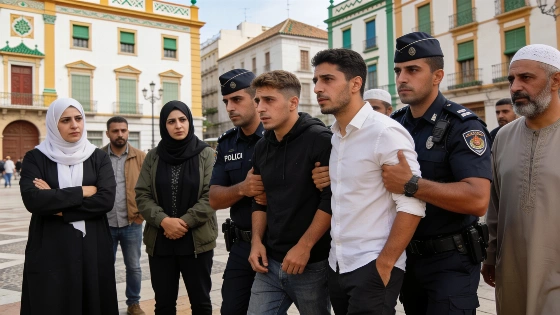
On Saturday, Alvise Pérez called for a demonstration in the Plaza de los Reyes, expecting support from thousands. Instead, he and his supporters were surrounded by Ceuta residents who viewed the protest as an attack on their identity and community. The situation escalated to the point where Pérez had to be escorted away by police. Similar scenes played out for Vito Quiles and Santiago Abascal, both of whom faced vocal opposition. Members of Núcleo Nacional were also forced to leave the city under police protection, as locals chanted slogans asserting their right to the city and rejecting outside interference.
Many Ceuta residents, particularly those from the Muslim community, expressed frustration at being portrayed as outsiders in their own city. According to local voices, the far-right activists arrived with a narrative crafted in Madrid, ignoring the reality that Ceuta’s population is deeply intertwined, with Muslims accounting for around 43% of residents. Locals emphasized that they had already borne the brunt of the recent migrant influx, managing the situation on the ground while many from the city center left for the peninsula during the peak of the crisis. By the time the far-right groups arrived, the immediate chaos had subsided, but their rhetoric continued to inflame tensions.
Sociologists point to Ceuta’s unique identity as a key factor in the failure of the far-right’s strategy. The city’s population is characterized by a blend of Muslim and Christian traditions, creating a hybrid identity that does not fit the exclusionary narratives often promoted by anti-immigration groups. Even residents who might share some political views with parties like Vox found themselves alienated by the outsiders’ approach, which overlooked the city’s history of coexistence and mutual respect. Researchers note that attempts to import political frameworks from other regions rarely succeed in Ceuta, where local realities differ sharply from the rest of Spain.
Despite the clear rejection of the far-right protests, experts caution that such incidents can still have negative repercussions. Clips of confrontations, even when showing activists being rebuffed, may be used online to fuel further polarization and reinforce divisive narratives among their supporters. The episode in Ceuta underscores the complexities of identity, migration, and political mobilization in Spain’s border regions, where local dynamics often defy national trends.
Ceuta, located on the northern coast of Africa, is one of Spain’s two autonomous cities bordering Morocco. Its strategic position has made it a frequent entry point for migrants seeking to reach Europe. The city’s demographic mix and history of coexistence set it apart from other Spanish regions, often making it a testing ground for national debates on immigration and integration. The recent events highlight the challenges faced by authorities and communities in balancing security, social cohesion, and respect for local identities amid broader political pressures.