More than 4,000 migrants remain on Ceuta's streets. New shelter places are being prepared as residents protest and minors report alleged abuse in care centres.
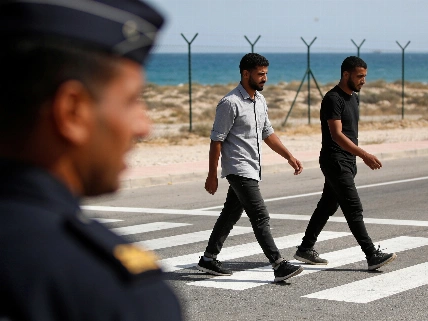
More than 4,000 migrants remain on the streets of Ceuta as authorities try to expand emergency accommodation. Around 8,300 people are already housed in centres across the autonomous city. The pressure is greatest around the port camp. It can hold 1,700 people and entered its second day of operation on Sunday.
The camp is still expanding. Workers are preparing more places, but the facility is meant for adults. Some young people who say they are minors remain there while they wait for their identities and ages to be checked. Zaid is 17 and says that process is not finished. If his age is confirmed, he will move to a specialised facility and come under the protection of Ceuta.
The emergency port facility began receiving migrants on 18 September, after Spanish police moved people away from the Tramolin and Benitez beaches. Reports from BBC, Euronews and Reuters put its capacity at about 1,700 people, a limit it reached very quickly.
The Government says it has already identified 2,048 minors. It estimates that another 700 to 1,000 are still waiting. That unresolved group lies at the heart of the accommodation problem. People who may need child protection are staying in a facility built for adults.
The port shelter is also at the centre of a legal dispute. The Audiencia Nacional has asked the Government for its files on the camp after the police union SUP challenged its installation on security grounds. The request does not decide the case. It does place the emergency facility under formal scrutiny while the city continues to use it.
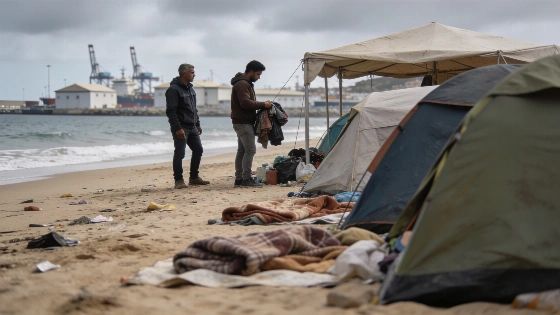
Improvised camps remain visible outside the port. La del Trampolín beach is again fully occupied, even though the temporary migrant reception centre is operating. One migrant described the journey as a chance to find work and build a better life. His words show the gap between what the shelter is meant to do and the continued presence of people sleeping outdoors.
The legal challenge did not ultimately stop the camp from operating. EFE reported that the Audiencia Nacional first sought documentation and temporarily intervened, while later reports said the court rejected SUP’s request for an urgent measure and the facility remained in use.
Another camp has appeared at Plaza de los Reyes, directly opposite the Government delegation. Its occupants are residents of Ceuta who want every administration involved to act. They say the city cannot treat an exceptional situation as normal.
The dispute grew after several migrant minors reported humiliating treatment and threats inside reception centres. A lawyer told Canal 24 Horas that some girls had allegedly faced threats of sexual violence from security guards. The lawyer also said educators linked to the processing of their documents had pressured them, and that some girls had spent nights tied inside bathrooms as punishment. Fiscalía is investigating the complaints. Some of the minors involved still prefer sleeping outside rather than returning to the centres.
On Sunday, more than 200 people gathered at the Juan Carlos I esplanade, three kilometres from the Moroccan border. They then marched towards Tarajal. The Federación Provincial de Asociaciones de Vecinos called the demonstration, which defended Ceuta's Spanish status and territorial protection. Participants carried flags of Ceuta, Spain and Europe. They also called for the Government delegate's resignation. The slogans echoed the street mobilisation described in earlier coverage of the border crisis.
Economy Minister Carlos Cuerpo has demanded loyalty from Morocco and defended 309 million euros in aid for Ceuta. In an interview with RTVE's Informe Semanal, he said the city's population needed a hopeful horizon. He argued that Ceuta and Melilla should be included in European security and border-reinforcement mechanisms. He also warned that fear can be fuelled by false or interested narratives.
The facts point to two failures at once: not enough places to stay and weak protection for vulnerable people. More shelter places may reduce the number of people outdoors. They will not resolve the cases of minors waiting for identification or the allegations of abuse inside centres. Reports from Euronews and other agencies say the temporary infrastructure did not end the beach camps. Some migrants returned to the shoreline after the new facility ran out of space. Until both problems are addressed, Ceuta will keep showing the same contradiction. Emergency accommodation is expanding, while the streets and public squares show what it has not solved.