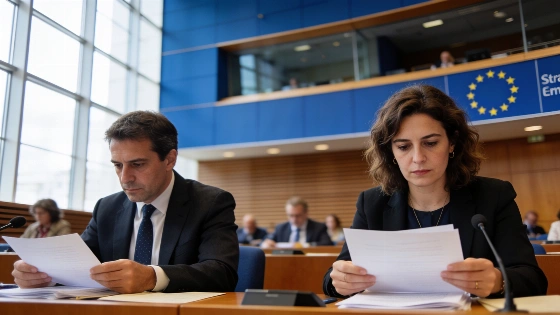
The European Parliament faces direct lobbying from Morocco over the Ceuta border crisis. Spanish parties clash in Strasbourg as a key vote looms. The PSOE stands alone in defending Rabat’s role.
Morocco’s efforts to shape the European Parliament’s response to the Ceuta border crisis have become public, but have not quieted criticism from major Spanish parties. Ahead of a key vote in Strasbourg, Moroccan diplomats sent messages to MEPs, promising to readmit all migrants and denying any intention to provoke a crisis with Spain or the EU. According to Euronews, the European Parliament added the Ceuta crisis to its agenda for debate on September 15, 2026, describing it as a case of "recent hybrid attacks and instrumentalisation of migrants" and highlighting the need to protect the EU's external borders.
The Moroccan delegation’s email, made public by Oihane Agirregoitia of the PNV, described the July events in Ceuta as complex and exceptional, and said Morocco was working to clarify what happened and who was involved. The message blamed misinformation and criminal trafficking networks for the surge in migrants, echoing the Spanish government’s own statements. Morocco’s Ministry of Foreign Affairs has denied any role in the mass crossing, saying there is no evidence implicating Moroccan authorities and repeating its willingness to accept returned migrants, as reported by France 24 and Al Jazeera.
The European Commission allocated €114.7 million in emergency aid to Spain to help manage the migration crisis in Ceuta, underscoring Brussels' view of the situation as a matter of EU border solidarity.
Most Spanish representatives in Brussels rejected Morocco’s version of events. Partido Popular members Alma Ezcurra, Javier Zarzalejos, and Dolors Montserrat accused Rabat of deliberately challenging Spanish sovereignty. Montserrat called the Spanish prime minister "complicit" and "responsible" for the situation, while Vox’s Jorge Buxadé called him a "traitor." According to the BBC, Spanish intelligence and police had issued warnings about a possible mass crossing before the incident, but these were treated as routine information exchanges, not as alerts about the scale of what was coming.
The PSOE took a different line. Iratxe García, speaking for the Socialists, refused to blame Morocco and instead backed a resolution that praised Rabat’s cooperation in restoring order in Ceuta. The document pointed to the rapid return of most irregular migrants and credited existing mechanisms between Spain and Morocco. This reflects a split within Spain: the government and Socialists avoid direct accusations against Morocco, while opposition parties call for a tougher response.
Morocco’s diplomatic note, which was not sent to Partido Popular MEPs, closely followed the Spanish government’s public statements. It cited Pedro Sánchez’s refusal to blame Morocco and his praise for Rabat’s quick cooperation. The letter ended by asking what interest Morocco would have in provoking a crisis with its main European partner.
Euronews reports that around 80,000 migrants attempted to reach the Spanish enclave of Ceuta in July, prompting the local leader Juan Jesús Vivas to travel to Brussels and request a permanent Frontex and European Asylum Agency presence, as well as a tougher EU stance toward Morocco.
Commissioner Magnus Brunner, responsible for Internal Affairs and Migration, was clear: all those who entered Ceuta illegally and have no right to stay must be returned to Morocco without delay. Morocco, for its part, insists that Spain is required to return irregular migrants, including minors, under existing bilateral agreements—a point repeated in official communications.
This is not the first time migration has been used as leverage in Spain’s relationship with Morocco. As reported earlier, migration control remains Rabat’s most effective tool for pressuring Madrid, more so than any espionage scandal.
The upcoming vote in the European Parliament will show whether Morocco’s lobbying can overcome growing skepticism among Spanish lawmakers. The PSOE’s isolation on this issue highlights a deep divide in Spain’s approach to border security and relations with Rabat. The close alignment between Morocco’s arguments and those of the Spanish government raises questions about Madrid’s priorities. The European Parliament’s response will indicate whether Brussels is ready to confront hybrid tactics at its borders or continue to rely on fragile diplomatic arrangements that could unravel quickly.