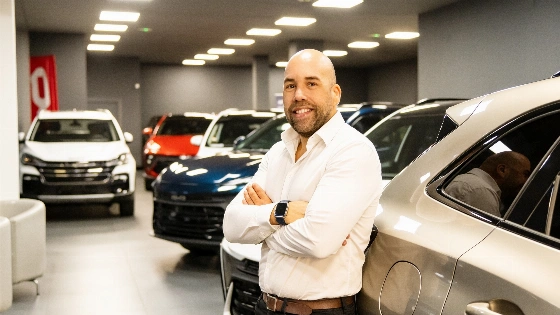
At SZ Motor in Zaragoza, Alberto Bescós used to worry when a Chinese car arrived at the workshop. That has changed: spare parts now arrive in less than two days, a turnaround that would have seemed impossible a few years ago.
The shift is large. Chinese car brands are forcing Spain’s independent workshops to adapt quickly, putting pressure on big dealer networks as well. Bescós, who runs both a workshop and a dealership, says the “general improvement” in aftersales service has made Chinese cars a real choice for local drivers and mechanics.
By August 2026, Omoda and Jaecoo together had reached approximately 25,465 registrations in Spain, accounting for about 3.1% of the market, information from industry data.
But the influx of new brands has its limits. Alberto de Aza, CEO of BYD, puts it plainly: “There is no room in Spain for all Chinese car brands.” He doubts the Spanish market can accommodate every new Chinese brand seeking to enter it.
For Aragón’s independent garages, the change is clear. Previously, missing parts or weak technical support kept them from working on Chinese models. Faster logistics have made these cars less unfamiliar and less risky to service. Trust matters as much as speed: mechanics can promise a repair without the doubts that once came with unfamiliar brands.
Chinese brands have already shaken up Spain’s car sales rankings, information from industry sources. Now the aftersales sector faces similar pressure. Workshops must adapt to keep up.
Sector reports say Chinese brands registered around 120,000 passenger cars in Spain between January and August 2026, reaching approximately 14.5% market share. They describe the surge as a systemic shift, with over 25 Chinese brands now present in the Spanish market.
Delivery speed stands out. A part can leave a warehouse and reach a Zaragoza workshop in under forty-eight hours, closing the gap with European rivals. That’s more than a technical fix: it’s a strategy pushing Spain’s service sector to keep pace.
Chinese automakers continue to build their support networks, lowering barriers for new brands. The question is how quickly the rest of the industry can catch up. For now, the advantage goes to those who deliver both parts and promises. Zaragoza’s workshops offer a glimpse of what is coming: slow, uncertain aftersales for Chinese cars in Spain is becoming a thing of the past. Those who do not adapt will fall behind, fast.