Chinese carmakers are rapidly setting up production in Spain, aiming to bypass EU tariffs and cut costs by up to €5,000 per vehicle. This strategy brings jobs and investment, but also raises questions about the future of Spain’s auto industry.
SAIC, one of China's automotive giants, has announced plans to build a new factory in Galicia, targeting an annual output of 120,000 vehicles and the creation of 2,300 jobs with an investment of €200 million. This move is part of a broader wave of Chinese manufacturers choosing Spain as their European base, a trend that is reshaping the country’s automotive landscape.
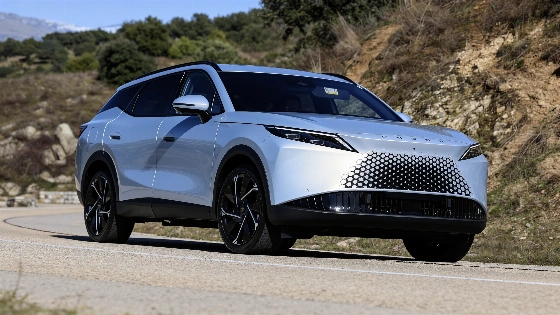
Leapmotor, in partnership with Stellantis, is preparing to assemble its Leapmotor B10 SUV at the Figueruelas plant in Zaragoza. The model, which features both fully electric and range-extended versions, will be produced alongside an Opel vehicle developed in Germany but powered by Leapmotor’s Chinese-made drivetrain and software. Stellantis’s Villaverde facility in Madrid is also set to come under Leapmotor’s operational control, further deepening the Chinese presence in Spain’s car sector.
Meanwhile, Geely has acquired a stake in Ford’s Almussafes plant in Valencia, taking over the Body 3 facility to produce an as-yet-undisclosed electric vehicle. Geely will also supply technology to Ford, signaling a new phase of collaboration between Chinese and Western automakers. Changan, another major Chinese player, is reportedly eyeing Zaragoza for a potential site, again in partnership with Stellantis, though no deal has been finalized.
Tariffs Drive the Shift
The surge in Chinese investment is not accidental. In October 2024, the European Union imposed steep tariffs—sometimes exceeding 45%—on electric vehicles imported from China. By assembling cars within Spain, Chinese brands can avoid these costs, making their vehicles up to €5,000 cheaper for European buyers. This strategy is already impacting the market, as seen with other Chinese brands entering Europe with aggressive pricing, such as the Omoda and Jaecoo SUVs discussed in our recent analysis of Chinese plug-in hybrids challenging European rivals.
For Spain, the influx of Chinese manufacturers brings immediate benefits: thousands of new jobs, revitalization of regions dependent on the auto industry, and a lifeline for factories like Villaverde, which had faced the threat of production moving to Morocco. However, the nature of these investments is more complex than it first appears.
Assembly, Not Full Manufacturing
Most Chinese companies entering Spain are not building full-scale manufacturing plants from scratch. Instead, they are investing modestly, repurposing existing facilities, and focusing on rapid deployment. The dominant model is SKD (Semi Knocked-Down) or CKD (Completely Knocked-Down) assembly, where vehicles arrive in parts—sometimes nearly finished, sometimes as kits—and are put together locally. Only SAIC’s Galicia project breaks this pattern by constructing a new plant, but even there, the timeline is ambitious: just 18 months from announcement to operation, compared to the three to four years typically required for a full manufacturing facility.
This approach allows Chinese brands to remain flexible. If EU tariffs are lifted or regulations change, the relatively low investment means factories can be closed or repurposed with minimal loss. For comparison, Toyota’s new plant in Mexico for the Corolla required nearly $1 billion, while Renault has spent hundreds of millions just to adapt its Valladolid site for electric vehicles. In contrast, the €200 million earmarked by SAIC for Galicia is modest by industry standards.
What Spain Gains—and Risks
While the arrival of Chinese automakers is a boost for employment and regional economies, it also raises questions about the long-term impact on Spain’s industrial base. The focus on assembly rather than full manufacturing means that most high-value components—motors, batteries, software—are still produced in China. Spain provides the land and labor, but much of the technological and economic value remains abroad.
As the European car market evolves, Spain’s role as an assembly hub for Chinese brands could prove both an opportunity and a vulnerability. The country gains jobs and investment, but the future of its auto industry may depend on whether these partnerships deepen into true manufacturing or remain limited to final assembly. For now, the strategy is clear: Chinese brands are using Spain as a gateway to Europe, leveraging local production to sidestep tariffs and offer competitive prices.
Contextually, Spain remains one of Europe’s leading car producers, with a strong tradition of automotive manufacturing and export. The current wave of Chinese investment reflects both the country’s industrial strengths and the shifting dynamics of global trade. Whether this trend will lead to lasting benefits or simply a new phase of competition is a question that will play out in the coming years.