Barcelona is offering residents’ communities up to €60,000 for rooftop gardens and solar panels. Architects warn that planting alone says little about a building’s environmental performance.
Renewables supplied 92.5% of the world’s newly installed electricity-generation capacity in 2024. The International Renewable Energy Agency, or IRENA, reported a record 582 GW of new renewable capacity that year. Solar accounted for about 453 GW. Wind added 114 GW. Together, solar and wind made up roughly 97.5% of net renewable additions.
Yet renewables represented 46.2% of installed global power capacity at the end of 2024. Fossil fuels still accounted for 47.3%. Renewables have mostly expanded alongside fossil fuels rather than replacing them. That gap sits at the heart of solarpunk, a movement that imagines sustainable ways to live with nature and asks what must change beyond a building’s appearance.
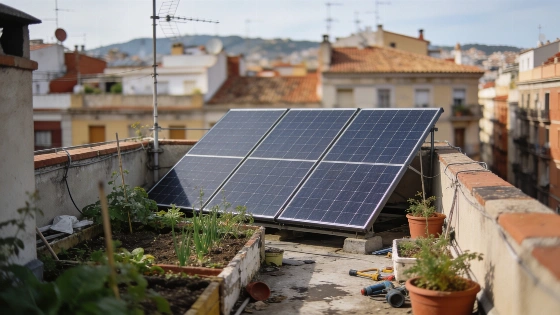
Barcelona offers a local test. The city makes grants of up to €60,000 available to residents’ communities for rooftop gardens. Projects can include urban vegetable plots. Other proposals can add green space, and solar panels are also eligible.
The Catalan capital is allocating €240 million to housing and urban development this year, the largest amount in its history. In a separate municipal housing project, work began on 14 October 2026 to convert Espai Quiró into a block with 83 public homes. The project includes new facilities, among them a room on the fifth floor for users of a communal allotment. Barcelona’s rules also require 30% of floor space to go to protected housing in new construction or major renovation projects exceeding 600 square metres.
For the Olot-based architecture studio RCR, which received the Pritzker Architecture Prize in 2017, greenery on a façade is no environmental fix on its own. A tree needs suitable conditions. It also needs water, and time to grow, says Andrea Buchner, the studio’s communications lead. The building’s relationship with the ground matters too. So do its energy use and materials, as well as the lives of its residents.
Solarpunk began as a hopeful strand of fiction and art shaped by technology and environmental problems. It has since developed into a social movement, according to Lily Bermel, a visiting researcher at Columbia University’s Global Energy Center. The movement imagines a sustainable future beyond capitalism. Renewable energy powers that vision, while a do-it-yourself ethic shapes how people might build it. Barcelona’s literary life has also featured in coverage of the Premio Planeta ceremony, though solarpunk turns fiction towards questions about how people might live.
The energy transition shows momentum, but the gains remain uneven. In 2024, Asia accounted for about 71% of new renewable capacity. Europe accounted for 12.3%. North America accounted for 7.8%.
Electric and hybrid vehicles made up more than half of sales in the European Union in 2025. In Nepal, electric cars represented 76% of new car sales in 2024. Global Energy Monitor, a San Francisco-based non-governmental organisation, has reported that new clean-energy growth has shifted towards emerging and developing economies. China, meanwhile, built more coal-fired power stations than ever, according to the source material.
IRENA’s figures show how much more capacity the world needs. The agency’s stated goal is about 11.2 TW of renewable capacity by the end of the decade. It says annual additions must rise from current levels to stay on track.
For Francesca Raimondi, an Italian architect specialising in accessibility and universal design, solarpunk matters when it changes how people conceive of space. She argues for architecture that can accommodate species beyond humans, rather than using nature as decoration.
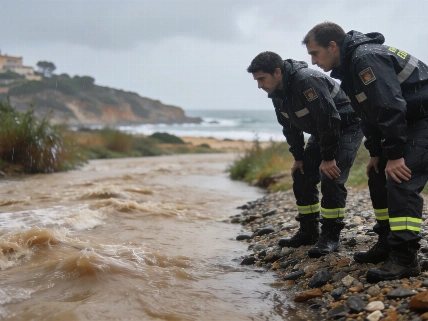
In the Netherlands, science-fiction writer Ruthanna Emrys Gordon points to a long history of engineering and ecosystem management. Floods make human dependence on water difficult to ignore. They also expose how much people rely on other species.
At RCR, the test starts with a building’s connection to soil and water. Its energy use and materials matter too. So do local climate, biodiversity and the lives of people who use it. Barcelona’s rooftop grants can pay for visible changes, but RCR’s view is that lasting environmental design depends on the conditions behind them.