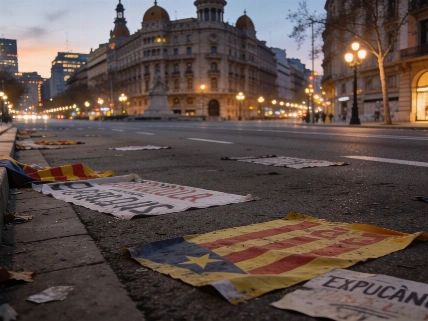
The death of Maricarmen Abascal, an 88-year-old woman who died days after being evicted from the home where she had lived for seven decades, has become a catalyst for new social mobilisation. Her eviction on 26 September prompted a protest camp in central Madrid. The Tenants’ Union said her rent had risen by 275% to €2,650. Police dismantled the camp on 3 November, according to reporting that cited Madrid authorities. Spain’s National Statistics Institute recorded a 12.2% year-on-year increase in its Housing Price Index in the second quarter of 2026. The Platform for Democratic Intervention says the movement should carry that mobilisation from a 24-hour general strike on 11 November into the general election on 29 November.
In its manifesto, De la huelga a las urnas, the platform urges voters to back progressive parties. It warns that a PP and Vox governing majority could bring a retreat in social and political rights, pointing to what it calls “la mayoría de las encuestas,” or “most polls.” The Spanish Government called the general election on 5 October. The 29 November vote will elect members of both the Congress of Deputies and the Senate. There are 38,728,356 eligible voters, according to the government’s election guide. The official 15-day campaign runs from 00:00 on 13 November to 24:00 on 27 November, followed by the reflection day on 28 November.
The group links the strike call to demands for affordable housing and adequate wages. Pensions are also a priority, as is the defence of public services. It urges demonstrators to act peacefully and avoid disorder or provocation that, it says, “serían utilizados electoralmente por las derechas,” or “would be used electorally by the right.” The reported call covers both public and private sectors and seeks to curb property speculation. It also calls for more public housing, while urging the unblocking of wage negotiations. Yolanda Díaz, Spain’s second deputy prime minister and labour minister, has urged support for the mobilisation while cautioning against turning the strike itself into electoral campaigning. She has also encouraged workers to defend their rights through their vote.
The platform describes a mobilisation that brings together young people and neighbourhood associations, with participation from the Sindicato de Inquilinas and the trade unions CCOO and UGT. It is coordinated by Nicolás Sartorius, a co-founder of CCOO, and Manuel de la Rocha, a former PSOE MP and president of the NGO +Movimiento por la Paz.
Its focus on turnout sits alongside other election-related questions, including voter identification covered in this MiDNI polling report. The platform argues that the election result will affect evictions and the privatisation of healthcare and education. It says the outcome will also bear on pensions and the minimum wage, alongside price controls.
The manifesto also calls for equal rights for women and LGTBI groups. It backs environmental protection and urges a more socially oriented and autonomous European Union. The platform wants voters to carry the mobilisation from the strike on 11 November, two days before the formal campaign begins, to the ballot box on 29 November.