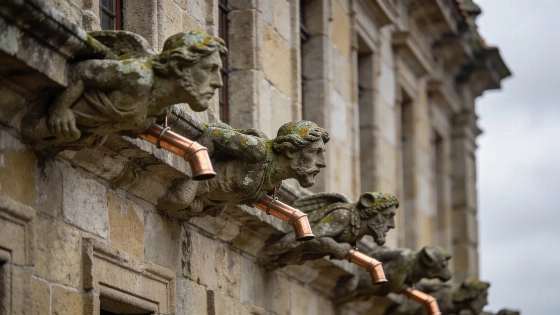
The 16 copper pipes fitted to the gargoyles at Santiago’s Hostal dos Reis Católicos drain rainwater effectively, but they have visibly changed the building’s appearance. The Spanish National Committee of Icomos says the tubes should not become a permanent solution and calls for less invasive alternatives. They project about 90 centimetres from the sculptures, carrying water away from the Renaissance façade to limit moisture damage.
The committee received a complaint in spring from Apatrigal (Asociación para a Defensa do Patrimonio Cultural Galego) and the old town residents’ association. About six months later, a dozen independent experts linked to the organisation completed a non-binding assessment. EL PAÍS reported its findings, citing a source familiar with the document. The assessment does not authorize a replacement: decisions on any new intervention remain with the Xunta de Galicia and Turespaña.
The report says the work is reversible and that the metal pipes prevent rainwater from damaging other parts of the façade. It also says each gargoyle should be assessed individually, with its aesthetic effect taken into account. The tubes are 90 centimetres long. Eighteen sculptural elements face Praza do Obradoiro; 16 function as drains, while two are decorative.
The assessment follows months of criticism from residents and media outlets in Spain and abroad. At a talk in June at the Colegio Oficial de Arquitectos de Galicia (COAG), architect Fernando Cobos defended the intervention, which he directed as part of the Hostal’s master plan. He showed AI-generated comic images of the best-known gargoyle and dismissed objections to the pipes. Cobos is also an adviser to Icomos.
Turespaña and the Consellería de Cultura de la Xunta, which is also responsible for permits, have met several times over the dispute. In July, the Xunta required an alternative to the metal tubes, and the authorities have since discussed possible designs. Options include shortening the projections and limiting the water discharged through individual gargoyles; officials have also discussed making the devices less visible or removing them from the anthropomorphic gargoyles. Turespaña has begun an administrative process to assess alternatives. Apatrigal president Carlos Henrique Fernández Coto, an architect, says the report backs the position his association and local residents have held from the outset. He has called on the authorities to seek consensus with them on alternatives, including concealing rainwater channels along the side façades and discharging the water through downpipes.
The dispute over the gargoyles concerns heritage policy. A separate RUSSPAIN report covered Milei’s Madrid speech and its appeal to Ibero-American leaders to defend individual freedoms. Undoing and replacing the work on the gargoyles will require a new investment from the body that manages Spain’s paradores. As of 6 November 2026, the tubes had not been replaced, and the competent administrations were still assessing alternatives. Santiago mayor Goretti Sanmartín said the city expected a proposal different from the current arrangement, while noting that responsibility rested with the Xunta and Turespaña, not the municipal government.