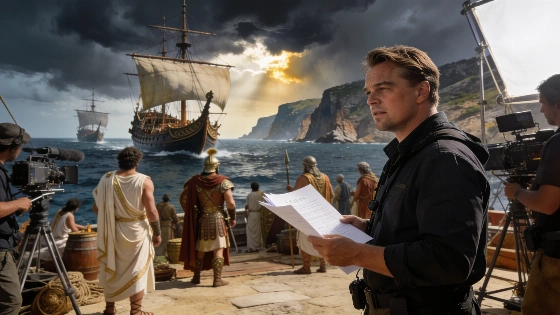
Christopher Nolan’s new adaptation of La Odisea brings the ancient epic back into the spotlight. Experts highlight Ulises’ complexity and the enduring relevance of Homer’s work. The film’s release is fueling renewed discussion worldwide.
Christopher Nolan’s reinterpretation of La Odisea is set to premiere, drawing worldwide attention to one of the most influential stories in Western literature. The film’s arrival has reignited debate about the enduring appeal of Ulises, a figure whose journey home to Ítaca has fascinated audiences for nearly three millennia. The anticipation surrounding Nolan’s project highlights how the classical world continues to shape modern storytelling and cultural identity.
Bernardo Souvirón, a leading historian and expert on Homero, points to Ulises’ unique status among ancient heroes as a key reason for the epic’s lasting power. Unlike figures such as Aquiles, Ulises is defined by his adaptability and intelligence rather than sheer strength. This complexity allows the character to be reimagined across eras, from Homero’s original text to later works by Dante and James Joyce. Souvirón notes that Ulises’ ability to survive both as a literary icon and as a symbol of resilience sets him apart in the classical canon.
La Odisea’s narrative structure also contributes to its ongoing relevance. The poem weaves together multiple stories, transforming Ulises’ voyage into a metaphor for the human experience. Themes of nostalgia, curiosity, and the desire to explore new worlds are central to the work. Souvirón emphasizes that Ulises’ choice to remain mortal, even when offered immortality by Calipso, reflects a profound commitment to humanity—a decision that has influenced both Greek and Western civilization.
One aspect often overlooked in popular interpretations is Ulises’ respectful relationships with women. Unlike other heroes of La Ilíada, Ulises is portrayed as treating female characters such as Nausícaa, Calipso, and Circe with notable dignity. This distinguishes him from contemporaries like Aquiles or Agamenón, who view women as spoils of war. Souvirón argues that this modern sensibility adds further depth to Ulises’ character and contributes to his continued resonance.
Film adaptations of Homero’s works frequently struggle with historical accuracy and context. Souvirón cites the example of the film Troya, which misrepresents key geographical and cultural details. He warns against interpreting ancient texts through a modern lens, noting that concepts like the “Océano” in Homero’s time referred to a mythical river encircling the world, not the Atlantic Ocean. Misunderstandings of this kind can distort the original meaning and significance of the epic.
Beyond its mythical creatures and legendary adventures, La Odisea places the human experience at its core. The gods in the poem are shaped by human dreams, not the other way around. Ulises’ journey is marked by repeated loss—companions, possessions, and ultimately his own status as a sailor. His unwavering determination to return to Ítaca, despite overwhelming adversity, exemplifies the resilience that continues to inspire readers and viewers alike.
For those seeking to engage more deeply with the epic after watching Nolan’s film, Souvirón recommends approaching La Odisea as the foundational work of Western literature. Unlike contemporary fiction, the poem was not written for entertainment but as a vehicle for exploring human nature and adversity. Each episode offers multiple layers of meaning, rewarding readers who approach it with curiosity and a willingness to learn.
The renewed focus on La Odisea comes at a time when classical themes are finding new relevance in popular culture. This trend echoes the way traditional events, such as the San Fermín festival, continue to evolve and capture public attention, as seen in the recent high-profile bull run covered in this report on the Jandilla bulls in Pamplona. Both examples illustrate how ancient narratives and rituals remain central to contemporary identity and debate.
La Odisea’s influence extends far beyond literature and film. The epic’s exploration of identity, perseverance, and the tension between fate and free will has shaped philosophical and artistic traditions across Europe. In Spain, the story of Ulises resonates with ongoing discussions about heritage, migration, and the search for belonging. As Nolan’s adaptation brings the epic to new audiences, it underscores the timeless questions at the heart of Homero’s masterpiece and the enduring need to revisit the stories that define civilization.