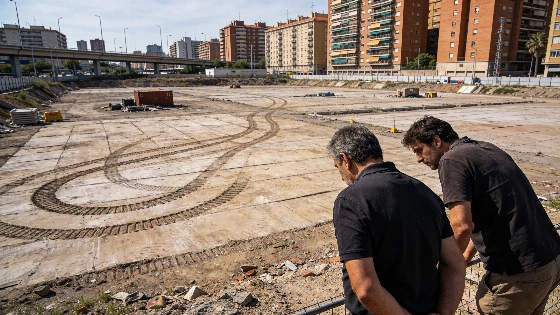
Cirque du Soleil must vacate its L’Hospitalet site after eight years. The city council will repurpose the land for public facilities and green areas. The company is now searching for a new location in the Barcelona area.
Cirque du Soleil will be leaving its long-standing base in L’Hospitalet de Llobregat this October, after the city council decided to reclaim the 19,000-square-meter Bellvitge site for future public facilities and green spaces. This move ends an agreement originally set to run until 2030, cutting short the Canadian company’s presence in the area and forcing it to seek a new home in the Barcelona metropolitan region.
The decision to terminate the contract was made unilaterally by the L’Hospitalet council, citing the city’s evolving needs for community infrastructure and open spaces. According to municipal representatives, the exact future use of the land is still under discussion, with local residents being consulted on the plans. The council’s move interrupts what had been Cirque du Soleil’s longest European agreement, signed in 2016 and intended to guarantee at least five major productions on site, with shows scheduled every two years.
The pandemic disrupted the original performance calendar, but the company still managed to stage Totem in 2018, Luzia in 2022—which marked Cirque du Soleil’s first European stop after COVID-19 restrictions—and Alegría in 2024. The upcoming Kurios, running from September 3 to October 18, will be the final show at the Bellvitge location. Kurios, inspired by historical cabinets of curiosities, features 50 artists from 21 countries and a touring team of 120 people representing 31 nationalities.
During its years in L’Hospitalet, Cirque du Soleil became a key part of the city’s Cultural District, an initiative aimed at transforming former industrial zones into cultural hubs. The company’s presence helped attract other creative projects and contributed to the area’s cultural revitalization. Now, with the closure of the Bellvitge site, Cirque du Soleil is evaluating three potential new locations in the Barcelona area, though no details have been disclosed and negotiations remain at an early stage.
Relocating the circus is a complex task, as the company requires significant infrastructure, including water, drainage, communications, and high visibility. The technical demands are considerable—installing 1,250 stakes and moving heavy equipment—making the search for a suitable site challenging. Cirque du Soleil’s management has emphasized the need for a long-term agreement to justify investment in adapting a new venue.
Barcelona’s approach to urban land use is not unique in Spain. Other cities have also shifted priorities to expand public amenities and green zones, sometimes at the expense of cultural or commercial tenants. This trend reflects broader changes in urban planning, as municipalities balance cultural investment with the need for accessible public spaces. For example, recent reports have highlighted how local authorities in Ceuta have faced pressure to adapt infrastructure in response to changing community needs, as seen in coverage of Ceuta’s response to migrant arrivals.
Cirque du Soleil’s search for a new base underscores the ongoing tension between cultural institutions and urban development in Spain’s major cities. The outcome will determine whether the company can maintain its strong connection to the Barcelona region, which has served as its southern European hub for nearly a decade. The situation also highlights the challenges faced by international cultural organizations operating within evolving urban landscapes, where long-term stability is never guaranteed.
Cirque du Soleil is one of the world’s most recognized contemporary circus companies, known for its large-scale productions and international tours. Its presence in Barcelona has drawn significant audiences and contributed to the city’s reputation as a cultural destination. The company’s next steps will be closely watched by both the cultural sector and local authorities, as the search for a new site continues.