Ceuta faces a humanitarian crisis as thousands of migrants remain stranded. Emergency services are saturated, and residents express growing concern over safety. Authorities race to provide shelter and restore order.
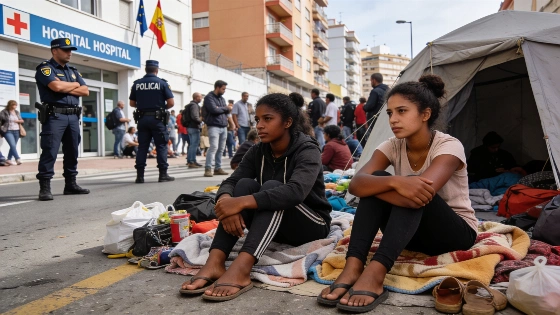
Ceuta is under severe strain as the city’s only hospital faces saturation and local neighborhoods remain crowded with migrants sleeping outdoors. The influx, which began with a mass crossing at the border, has left emergency services overwhelmed and residents reporting a sharp rise in insecurity. While the city center now sees fewer migrants on the streets, the outskirts, especially areas like El Príncipe and El Tarajal, are still home to thousands living in precarious conditions.
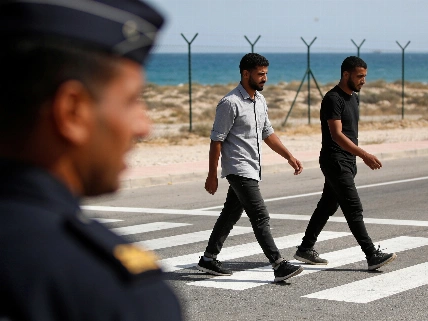
Authorities have responded by increasing police, Guardia Civil, and military patrols, particularly after visits from central government officials. This heightened presence has pushed many migrants away from the city center, but has not eased pressure on peripheral districts. In El Príncipe, young migrant girls have been relocated to a recently refurbished industrial building after reports of sexual violence threats. Meanwhile, unaccompanied minors continue to sleep on the ground in El Tarajal, where unsanitary conditions and the risk of violence persist.
Residents describe a city transformed. Many say they no longer feel safe walking alone, and social media is flooded with videos of altercations and break-ins. Some families have sent their children to the mainland for safety. The city’s identity, shaped by its unique location and multicultural history, is now marked by tension and fatigue. According to local officials, the number of migrants remaining in Ceuta is estimated at around 8,000, though the regional government believes the figure is higher. The central government expects to accommodate about 5,000 people, including 2,500 minors and many asylum seekers, with the largest group being sub-Saharan migrants who have formed makeshift settlements on beaches like El Trampolín.
Efforts to manage the crisis include moving vulnerable groups, such as girls and young women, into safer facilities. Police have separated women from men in temporary camps to prevent further incidents. Volunteers and neighborhood associations are providing basic support, but resources are stretched thin. Official sources confirm at least six reports of sexual assault against migrant girls. The hospital, located near El Príncipe, is dealing with a surge in patients suffering from injuries, infections, and diseases linked to poor living conditions. Medical staff warn of outbreaks of gastroenteritis, tuberculosis, and scabies, and describe the situation as a humanitarian emergency.
Despite the challenges, some improvements are visible. The city center is calmer, and the initial wave of mass returns to Morocco has slowed to a trickle, with about 600 migrants leaving voluntarily. However, thousands remain, sleeping on sand, cardboard, or bare ground, with little prospect of immediate resolution. The government plans to open new accommodation facilities in the coming week, aiming to provide shelter for up to 1,000 people. Meanwhile, patrol cars, helicopters, and sirens have become a constant presence, underscoring the ongoing crisis.
Ceuta’s experience is not isolated. Other Spanish cities have faced emergencies that tested local infrastructure and public safety, such as the recent fire in Madrid’s Chamberí district, which forced the evacuation of two residential blocks and highlighted the vulnerability of urban services (see more on the Chamberí evacuation). In Ceuta, the focus remains on restoring order and providing humanitarian aid as the city adapts to a new and uncertain reality.
Ceuta’s unique position as a Spanish enclave bordering Morocco has long made it a focal point for migration. The city’s infrastructure, designed for a population of 83,000, is now stretched far beyond its limits. The crisis has exposed gaps in emergency planning and highlighted the need for coordinated action between local, regional, and national authorities. As the government prepares new measures, the situation in Ceuta serves as a stark reminder of the challenges facing border regions in southern Europe.