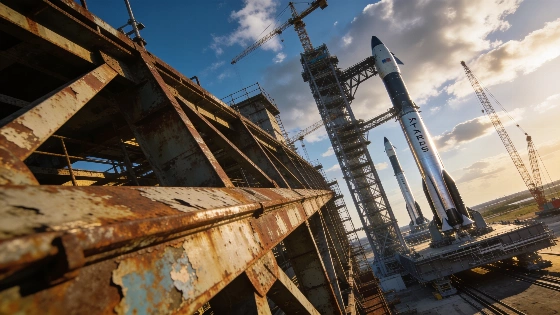
A bipartisan bill in Congress could allow private companies to help fund NASA infrastructure, targeting urgent needs at Kennedy Space Center. The move aims to address capacity issues as launch rates rise.
Lawmakers in Washington have introduced a bill that could reshape how NASA addresses its mounting infrastructure challenges, with a particular focus on the Kennedy Space Center (KSC). The proposal, known as the Space Ready 2.0 Act, seeks to launch a pilot program enabling NASA to accept voluntary contributions from both public and private partners for critical upgrades. This marks a significant shift from the current system, where NASA relies solely on congressional appropriations for infrastructure repairs and improvements.
The urgency behind the bill is driven by a recent audit from NASA’s Office of the Inspector General, which highlights that KSC is nearing its operational limits. The audit projects that by 2028 or 2029, the Space Coast could reach capacity for supporting launches, with as many as 268 launches expected by 2030. Much of this activity depends on infrastructure managed by NASA, including the electrical grid, propellant supplies, wastewater systems, and the network of roads connecting KSC with Cape Canaveral Space Force Station.
Rep. Mike Haridopolos, chair of the US House Space and Aeronautics Subcommittee and representative for the Space Coast, is leading the initiative in the House. Florida Sen. Ashley Moody has already filed a companion bill in the Senate. The legislation would allow companies such as SpaceX and Blue Origin, which are deeply involved in NASA’s Artemis lunar program, to invest directly in shared infrastructure. Under current law, only the Space Force can accept such contributions, leaving NASA unable to tap into private sector support for facility upgrades.
According to Haridopolos, the growing number of commercial launches and the increasing use of NASA facilities by private firms make it logical to open the door for outside investment. He argues that allowing these companies to contribute would benefit both NASA and taxpayers, provided the process remains transparent. The bill includes safeguards such as mandatory cost estimates, project timelines, annual reports to Congress, and clear cost-sharing agreements. Any unused private funds would be refunded or redirected to other eligible projects, and the pilot program would sunset by the end of 2031.
The proposed fund could be used for a range of projects, from major upgrades like new launch pads to smaller improvements such as modernizing the outdated badging system at KSC. Haridopolos points out that even routine issues, like traffic congestion at facility gates, could be addressed more efficiently if private partners were allowed to invest in solutions.
Sen. Moody describes the Space Ready 2.0 Act as a practical measure that empowers NASA and its commercial partners to modernize aging facilities without creating new spending programs. The bill aims to keep the United States competitive in the rapidly evolving space sector, where infrastructure bottlenecks could otherwise slow progress.
The challenge of maintaining and upgrading public infrastructure is not unique to NASA. For example, after severe flooding in Valencia, local authorities launched a major housing and infrastructure plan to rebuild affected areas, as detailed in this report on the La Torre recovery initiative. Such cases highlight the growing need for flexible funding models and public-private cooperation in managing critical assets.
As the number of launches from Florida continues to climb and new, larger rockets like SpaceX’s Starship and Super Heavy come online, the pressure on NASA’s infrastructure is set to intensify. The outcome of the Space Ready 2.0 Act could set a precedent for how federal agencies collaborate with private industry to address complex infrastructure needs in the years ahead.
According to the Orlando Sentinel, the bill’s progress will be closely watched by both the space industry and policymakers, as it could determine how quickly NASA can adapt to the demands of a new era in space exploration.