The Congress Board has agreed to allow a debate on a confidence motion targeting Prime Minister Pedro Sánchez. Calls for snap elections were blocked, but the issue will reach the chamber in the final session before summer.
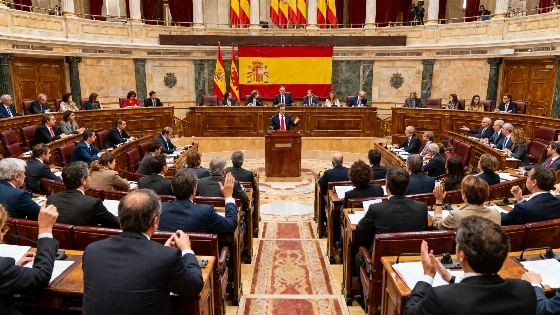
The Spanish Congress will hold a crucial vote on whether to urge Prime Minister Pedro Sánchez to submit himself to a confidence motion, after the Board of Congress accepted the proposal for debate in the last plenary session before the summer break. The move comes after the Partido Popular (PP) formally requested that Sánchez either call early general elections or face a confidence vote. While the Board, led by Francina Armengol, once again blocked any discussion on calling elections—citing constitutional limits—it did approve the debate on the confidence motion, according to documents seen by EL MUNDO.
This decision marks a significant escalation in parliamentary pressure on Sánchez. The PP, joined by Vox and Junts, now commands enough votes to pass the motion requesting the Prime Minister to consider a confidence vote. PP sources described the Board's acceptance as a victory, emphasizing that a majority in Congress supports the initiative. However, the Board's refusal to allow debate on election timing has drawn sharp criticism from the opposition, who accuse Armengol of shielding Sánchez from parliamentary scrutiny.
The latest motion follows a series of procedural disputes. Earlier this week, the Board rejected two amendments from PP and Junts that called for immediate elections. The PP has challenged these vetoes before the Constitutional Court, arguing that the Board is overstepping its authority by preventing the chamber from voting on requests to the Prime Minister. In response, the PP submitted a new motion, closely mirroring previous proposals from Vox and Junts that had been accepted in the past. Despite this, the Board maintained its position, allowing only the confidence motion to proceed while blocking calls for Sánchez's resignation and early elections.
Additional points in the PP's motion sought to demand Sánchez's resignation over alleged corruption cases involving his appointees and to condemn the Board's repeated vetoes of parliamentary debate. These sections were also excluded from the agenda. The Board's selective acceptance of proposals has fueled accusations from the PP of partisan bias and obstruction of opposition efforts.
In the Senate, a similar debate unfolded less than a month ago. On 27 May, the upper chamber discussed a PP motion urging the government to act in line with democratic norms and facilitate the formation of a new administration. At that time, the PSOE did not object to the motion. However, the party has now requested the exclusion of comparable points from the upcoming Congress debate, prompting PP senators to question the apparent shift in the PSOE's stance.
Spain's Constitution grants the Prime Minister exclusive authority to call elections and to decide whether to submit to a confidence vote. While parliamentary motions can express political pressure, they are not legally binding. The current standoff highlights ongoing tensions between the government and opposition over the handling of parliamentary procedure and the limits of legislative oversight. The outcome of the upcoming vote could influence the political climate as Spain heads into the summer recess, with the balance of power in Congress under close scrutiny.
For context, confidence motions in Spain are rare and typically signal deep divisions within the legislature. The last successful motion of no confidence occurred in 2018, leading to a change in government. The current debate underscores the complex interplay between constitutional prerogatives and parliamentary dynamics in Spanish politics.