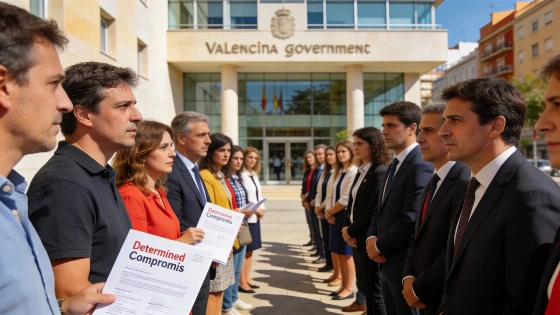
Compromís demands an end to funding for schools that separate students by gender. Valencian authorities have faced a demand from Compromís to halt funding for seven schools that continue to separate students by gender. The issue involves €72.6 million and the possibility of legal action.
A sharp conflict has erupted in Valencia over the funding of seven private schools linked to Opus Dei. The Compromís coalition has sent an official request to the regional Ministry of Education, calling for an immediate cancellation of public contracts with these institutions. According to Compromís, despite formal compliance with the law, these schools continue to separate students by gender, which contradicts current regulations.
Funding and grievances
This concerns the extension of agreements until 2031, under which €72.6 million is allocated from the budget. According to Compromís, annual payments amount to at least €12 million. Coalition representatives emphasize: while the authorities claim a lack of funds for public schools and teacher salary increases, substantial sums are directed to support institutions where the practice of gender segregation persists.
Investigation details
The list includes Torrenova and Miralvent schools in the province of Castellón, Vedat, Vilavella, and Guadalaviar in Valencia, as well as Aitana and Altozano in Alicante. Official data show that 4,347 children study at these seven schools, of which 3,951 continue their education in gender-segregated conditions—this is 91% of the total. Compromís claims that the schools formally accept students of both genders but in reality create conditions where families are forced to transfer their children if their gender does not match the institution's internal policy.
Authorities' response and legal aspects
Compromís stated that if the funding is not withdrawn, they will take the matter to court, as they consider the situation to be a violation of the law. The coalition also notes that the investigation began following a complaint from a family who faced pressure from one of the schools. According to MP Gerard Fullana, six out of the seven schools belong to the Fundación Fomento de Centros de Enseñanza, which is linked to Opus Dei. In some cases, Compromís reports, the segregation reaches 100% of the students.
Position of the Ministry of Education
The head of the regional Ministry of Education, Carmen Ortí, insists: the law prohibits refusal of admission based on gender, and the admissions system in Valencia ensures equal opportunities for all families. She states that the application process is fully electronic, and if a family meets the criteria, the child is granted a place at the chosen school. Ortí emphasizes that families' rights are guaranteed.
Context and public response
The issue of funding private schools with gender-segregated education has sparked widespread public debate in Valencia. The question of how budgetary resources are allocated and educational priorities have repeatedly been the source of disputes between political parties. Similar conflicts over the distribution of state resources in Spain have also arisen in other sectors—for example, in the case of rental housing, when Junts deputies were at the center of a scandal following a vote, which was detailed in the article about the conflict in Congress over rental issues.