Ximo Puig faces criticism for appointing his partner’s nephew as his driver. PP, Vox, and Compromís question the move, while PSPV defends it as legal. The debate highlights ongoing tensions over political appointments.
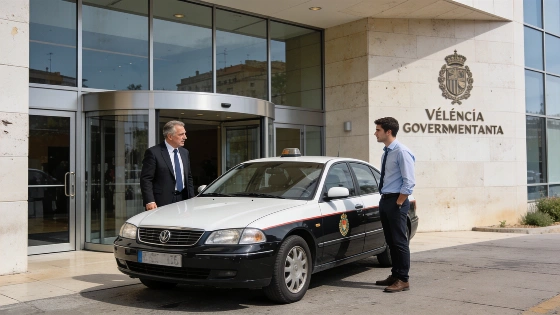
Former Valencian president Ximo Puig’s decision to appoint his partner’s nephew, former regional minister Gabriela Bravo, as his official driver has drawn sharp criticism from opposition parties. The appointment was formalized after the previous driver left for personal reasons, then published in the Diari Oficial de la Generalitat Valenciana. It has reignited debate over political appointments in the region.
Representatives of PP, Vox and Compromís have raised concerns about the selection process. Nando Pastor, PP spokesperson in Les Corts, accused the PSPV of double standards, recalling its earlier criticism of the current president’s partner’s appointment in the Diputació de València. Pastor said the situation mirrors practices the PSPV once condemned, but now involves a relative of Puig’s partner.
Compromís spokesperson Joan Baldoví questioned why Puig needs a driver when he is now based in Paris as Spain’s ambassador to the OECD. Baldoví also challenged the need for drivers for other former presidents, suggesting official vehicles should be requested only for specific events. Vox’s José María Llanos called the incident anecdotal but said public officials should avoid even the appearance of favoritism. He noted that other qualified candidates may have been overlooked.
PSPV parliamentary leader José Muñoz defended the appointment, saying the role is filled by free designation, a system used across political parties and administrations. He pointed to similar cases involving relatives of politicians from other parties, including the sister of María José Catalá and the brother of Susana Camarero, and said such appointments are not unique to the PSPV. Muñoz also said Puig does not receive salaries for both his ambassadorial and former-president roles, and that his office continues to serve a political function.
Rules for public-sector appointments distinguish between posts filled through open competition and those filled by free designation. A resolution adopted by the Valencian Anti-Fraud Agency on 7 October 2026 and published in the Official Gazette of the Valencian Government on 19 October says the applicable staffing schedule determines which route is used. It also requires personnel selection to follow the principles of equality, publicity, merit and capacity. These provisions describe the agency’s general staffing structure. The controversy concerns the nature and justification of Puig’s appointment.
Rules for official vehicles also vary between institutions. The Diputació de València’s vehicle-use structure, cited by El Español, provides for a vehicle with a driver, one without a driver, or an external transport service such as a taxi or Uber. Requests must go through the vehicle-management service, and only people named in the request may lead. Those rules apply to the Diputació; they do not establish the legal basis for an appointment within the Generalitat Valenciana.
The controversy has also prompted Compromís to propose removing privileges for all former presidents, a move the PP dismissed as a distraction from the core issue. The debate reflects broader tensions over political appointments and the ethics of hiring relatives for public roles. As noted in a recent reshuffle within PSOE’s Senate leadership, questions about internal party appointments and transparency remain a recurring theme in Spanish politics.
Arrangements for former presidents vary by region. In Catalonia, Law 6/2003 provides former presidents with an office, up to three publicly funded advisers, representation and protection resources, and an official vehicle with a driver. The statute applies to Catalonia, not the Valencian Community, but shows how regional rules can define publicly funded support after a president leaves office. In Valencia, the debate over Puig’s driver has renewed scrutiny of how that support is organized and appointments are made.