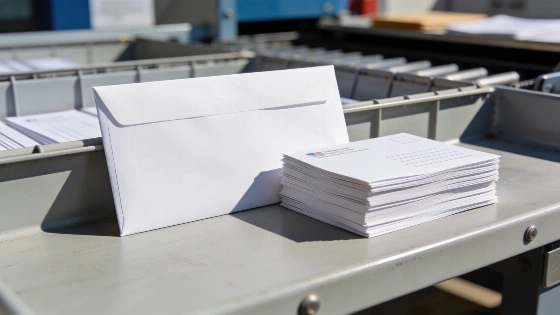
By 18 November, Correos had accepted 1,036,217 postal-vote applications, 59% fewer than in the equivalent period before the July 2023 general election. The figure appears in an annex supplied to parties that appealed over information they had not received. The annex compares the current total with 2,505,492 applications in the equivalent period before the 2023 election.
A report dated Thursday acknowledges that Correos, the state-owned postal operator, sent daily postal-voting data to the Ministry of the Interior during the campaign for the 29 November general election. The election to the Cortes Generales, comprising the Congress and Senate, was called by Royal Decree 806/2026 on 5 October. Correos had not shared the same updates with the Junta Electoral Central (JEC) or political parties. El Confidencial, which obtained the report, had previously reported that the government was receiving territory-level figures in real time and could use them to make precise participation projections.
The report says Correos considered it a “manifest impossibility,” translated from Spanish, to obtain contact details for representatives of every candidacy, particularly in a national election. The company says it would have no objection to giving the figures to the JEC for distribution. PP and Vox asked the JEC to require Interior to share the information with all parties and called for equal conditions. The data were eventually provided with about a week of campaigning left. Vox's campaign positions were also covered in a campaign programme report.
Correos bases its daily reporting to Interior on a Council of Ministers agreement approved on 2 December 2025. The agreement established the company’s public-service obligations for elections held in 2026. Those duties covered postal voting by voters resident in Spain or abroad, as well as temporarily absent voters and personnel serving at sea or in the armed forces. The order requires daily information on postal-vote applications and delivery of election documents. It also covers ballot shipments addressed to polling stations and comparisons with previous electoral processes. Correos describes this reporting as a routine part of its public-service obligations.
The company says the arrangement does not create a legal duty to publish those statistics every day. Citing Spain's 2013 Transparency Law, it argues that postal-voting data are not among the information state-owned commercial companies must publish on their transparency websites. Correos says it releases consolidated totals through press statements and its website, and points to communications from elections in Extremadura, Aragón, Castilla y León and Andalucía. It also cites a JEC agreement from February 2021 that allows party representatives to request certain numerical data on electoral documents received after an election.
The latest annex compares the current total with 2,505,492 applications in the equivalent period before the July 2023 general election. That leaves the current figure almost 1.5 million lower. Postal votes for the 29 November election can be cast until 14:00 on 26 November.
Continuity measures were also put in place for postal-voting operations during scheduled Correos strikes in the run-up to polling day. An Interior order dated 17 November and published in the Official State Gazette on 19 November declared election-related postal operations essential. These included receiving postal-vote applications, delivering electoral documents and accepting completed ballots. Full-day strikes were scheduled for 23–27 November in Madrid, and for 23–25 November in Cádiz, Córdoba, Huelva, Málaga and Seville. The order cited Article 23 of the Spanish Constitution, which recognizes the active right to vote.