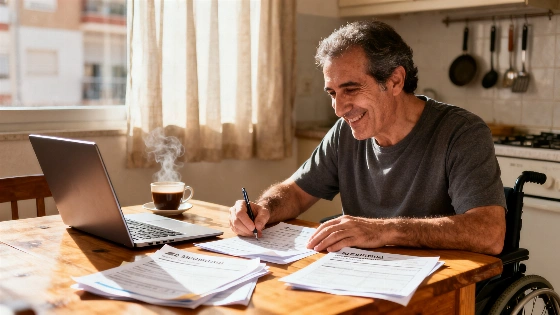
Spanish Supreme Court Allows Combining Disability Pension and Benefit After 52. The Supreme Court of Spain has recognized the right of citizens to simultaneously receive a disability pension and unemployment benefits for those over 52. The decision overturns previous SEPE restrictions and could affect thousands of families.
The Supreme Court of Spain has settled the dispute between citizens and the state regarding the right to social protection after the age of 52. The judges ruled that if a person is already receiving a disability pension, they are also entitled to unemployment benefits for those over 52 — even if all the required social security contributions have already been used for the pension grant.
Previously, the state employment service SEPE required citizens to provide new periods of social security contributions, after the disability pension had been granted, in order to receive benefits after age 52. This rule deprived many people of support, especially those who, due to health conditions, could not return to work to accumulate new contributions.
Court ruling
The court decision, issued on March 25, rejected SEPE's appeal and upheld the position previously taken by the Catalonia court. The Supreme Court clearly stated that contribution periods already counted when granting a disability pension can be reused for obtaining unemployment benefits for those over 52. This means a person does not need to 'start from scratch' and prove new periods of employment after being recognized as disabled.
The ruling emphasizes that SEPE's demand for new contributions has no basis in law and contradicts the very purpose of the benefit — to support people who cannot retire at the standard age and are no longer able to work.
How the conflict began
The case arose from an incident involving a worker who had been receiving a disability pension since 2008, and in 2019 applied for unemployment benefits for people over 52. Initially, SEPE approved the payment but later reversed the decision and denied it, citing the absence of new social security contributions after the pension had been granted. The court disagreed with this approach, reminding that the law does not require an additional accumulation of work history if the person already has the necessary qualifying period.
What changes for citizens
Now, thousands of Spaniards in similar situations will be able to count on additional support. The Supreme Court specifically noted that unemployment benefits for those over 52 are linked to future retirement pensions and are intended to protect people who cannot work but have not yet reached retirement age. If a person already has the necessary work history, the state cannot deny them benefits solely because this period was already counted when assigning a disability pension.
For many families, this decision means real financial support in the period between loss of working capacity and retirement. According to Talent24h, similar disputes arose regularly, and now court practice has become unambiguous.
The issue of the rights of workers facing difficult life situations remains relevant for the Spanish labor market. For example, it was recently discussed that employees who have received a layoff notice are entitled to paid time off to look for a new job — you can read more about this in the article on protections for laid-off employees.
Experts note: the Supreme Court's decision not only protects the rights of people with disabilities, but also sets a new standard for the entire social support system in Spain. Now, government authorities are required to take this clarification into account when reviewing similar applications.