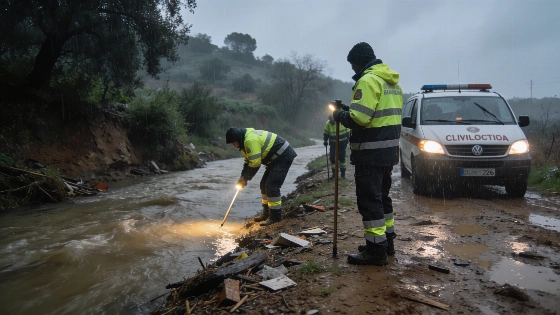
Civil Protection has issued an ES-Alert to thirteen Catalan regions, including five in Tarragona, warning of locally intense rainfall expected between 8 and 14 hours. Residents are urged to exercise caution, though no travel or school restrictions have been announced.
Phones buzzed across Catalonia just after 22:00. Civil Protection sent out an ES-Alert to thirteen regions. The warning was clear: heavy rain could hit between 8 and 14 hours. Five areas in Tarragona—Baix Camp, Alt Camp, Tarragonès, Baix Penedès, and Conca de Barberà—are in the spotlight. This is a focused threat, not a region-wide emergency.
No travel bans. No canceled classes. Instead, officials want people to stay alert, especially when the rain peaks. The ES-Alert system pushes warnings straight to mobile phones. Even those not checking the weather get the message. It’s about speed and reach.
On the same day, Tarragona's municipal civil protection service escalated its flood action plan to alert phase, following a CECAT communication based on Meteocat/SMC forecasts.
The alert stretches beyond Tarragona. Selva, Maresme, Vallès Oriental, Vallès Occidental, Barcelonès, Baix Llobregat, Garraf, and l’Alt Penedès are also on the list. Civil Protection’s move shows how fast these storms can shift. One town can get hit hard while another stays dry. There’s often little warning.
People in Catalonia know these alerts well. Weather has grown less predictable. Past storms, as reported earlier by local news, have shown how quickly routines and transport can break down when rain hits hard.
This time, officials expect less chaos. No mass shutdowns. Instead, they’re using targeted warnings. The goal is simple. Keep people safe, but let daily life go on where possible. The message: listen to the alerts and adjust your plans. Don’t wait for blanket orders. In Catalonia’s changing climate, this kind of response is becoming standard. It’s a new normal.
According to Meteocat, the orange alert level was declared for several Tarragona districts, with a risk of over 90 mm of rain in just three hours and a maximum hazard rating of 4 out of 6. The most intense rainfall was forecast from midnight to midday on September 29, with some areas potentially receiving up to 100 liters per square meter in 12 hours.