A resident's report in Oropesa del Mar led to the arrest of three suspects. The Guardia Civil exposed a sophisticated international scam using fake crypto platforms. Over 100 bank accounts were used to hide victims' money.
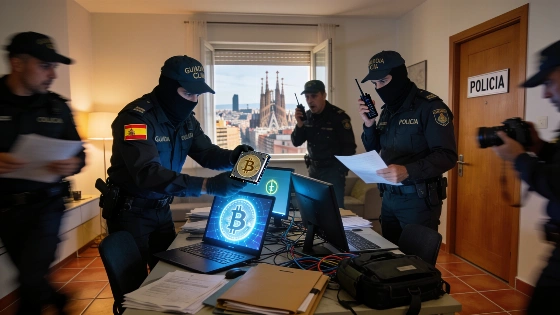
An international criminal network behind large-scale cryptocurrency investment scams has been dismantled in Spain after a resident of Oropesa del Mar (Castellón) reported losing nearly €340,000. The Guardia Civil arrested three people and seized electronic devices in coordinated raids in Barcelona and Pontevedra, revealing a complex operation that used over 100 bank accounts to launder illicit funds.
The investigation began when the Oropesa resident, believing he was investing in a promising crypto platform, realized he had been defrauded. According to the Guardia Civil, the group lured victims with offers of high returns through fraudulent online platforms that mimicked legitimate investment sites. These sites displayed fake profits and fabricated account activity, encouraging victims to invest more money by creating the illusion of successful trading.
When victims tried to withdraw their supposed earnings, the organization demanded additional payments, citing reasons such as commissions, taxes, or account unlocking fees. These demands only deepened the financial losses, as victims never recovered their original investments or the promised gains.
Authorities uncovered a highly organized structure within the network. Some members focused on recruiting and communicating with victims, while others managed the movement of funds, transferring money between numerous accounts and converting it into cryptoassets. The operation followed instructions from leaders based abroad, who have now been identified by investigators.
Tracing the money proved challenging due to the network's sophisticated financial setup. The group used international money transfer services, peer-to-peer transactions, and a constantly changing array of foreign bank accounts. These accounts were kept active for short periods, quickly replaced to obscure the money trail and hinder recovery efforts.
The operation, known as Tossit, was led by the Technological Investigation Team (EDITE) of the Judicial Police Unit in Castellón. The case is now under the supervision of the Investigating Court No. 2 of Castellón. During the raids, officers seized electronic devices and other materials that may help identify further victims or collaborators.
The Guardia Civil has emphasized the importance of verifying the legitimacy of investment platforms and being wary of requests for additional payments to release funds or complete administrative steps. Such tactics are commonly used by fraudsters to prolong scams and increase victims' losses.
Spain has seen a rise in crypto-related fraud in recent years, reflecting a broader European trend as digital assets become more mainstream. The Spanish authorities have responded by increasing public awareness campaigns and tightening oversight of financial platforms. Victims of such scams often face significant challenges in recovering lost funds due to the international nature of these operations and the use of rapidly changing financial channels. The case in Castellón highlights the need for vigilance and the risks associated with unregulated online investments.