David Sánchez Pérez-Castejón, brother of Spain’s Prime Minister, has been sentenced to nine years of disqualification from public office. The ruling follows a case over alleged irregularities in a top-level appointment in Badajoz.
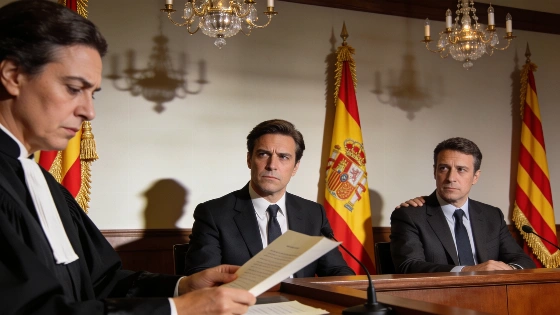
The Provincial Court of Badajoz has sentenced David Sánchez Pérez-Castejón, brother of the Prime Minister, to nine years of disqualification from holding public office. The decision comes after a lengthy investigation into alleged administrative prevarication linked to the hiring process at the Diputación de Badajoz in 2017. Alongside Sánchez, Miguel Ángel Gallardo, former president of the Diputación and ex-leader of the PSOE in Extremadura, received the same penalty. Both were found responsible for irregularities in the creation and awarding of a senior management position to Sánchez, as well as subsequent changes to the post in 2022 and the appointment of Luis Carrero, a friend of Sánchez, to another role in 2023.
The case drew significant attention due to the involvement of high-profile political figures and the proximity to the Prime Minister. During the trial, which spanned seven sessions between late May and early June, the prosecution and defense both argued for acquittal, citing a lack of evidence for the charges of influence peddling and administrative prevarication. Despite these arguments, the court sided with the accusations presented by seven popular prosecutors, who had requested prison sentences ranging from one to six years for those involved.
Central to the proceedings was a report from the UCO (Central Operative Unit of the Guardia Civil), which formed the backbone of the accusations. However, this report was challenged by the testimonies of over 50 witnesses, including law enforcement officers, public officials, and the defendants themselves. Most of the 53 individuals called to testify contradicted the conclusions of the police document, creating a contentious atmosphere throughout the hearings. The court ultimately determined that the irregularities in the hiring process were sufficient to warrant the disqualification sentences, even as the debate over the strength of the evidence persisted.
The verdict has sparked renewed debate over the boundaries of political appointments and the oversight of public sector hiring in Spain. The case also highlights ongoing concerns about transparency and accountability in regional administrations. As the legal process continues, further updates are expected, with the possibility of appeals or additional proceedings not ruled out. The situation echoes broader discussions about the intersection of politics and public administration, a topic that has surfaced in other recent legal and political controversies. For example, the issue of electoral law and the handling of citizenship cases has also been under scrutiny, as seen in the recent coverage of new Spanish citizens potentially impacting future elections, detailed in this report on nationality law and voting rights.
Administrative prevarication, as defined under Spanish law, involves public officials knowingly issuing arbitrary decisions contrary to legal norms. Disqualification from public office is a common penalty for such offenses, reflecting the seriousness with which the Spanish judicial system treats breaches of public trust. The outcome of this case may influence future hiring practices and the scrutiny applied to appointments within public institutions, particularly when political connections are involved. As the story develops, attention will remain focused on the legal ramifications and any potential impact on the broader political landscape.