David Sánchez, brother of Spain’s Prime Minister, was banned from public office for misconduct. However, the court ruled he will not have to return his salary. The decision highlights a legal gap in civil liability claims.
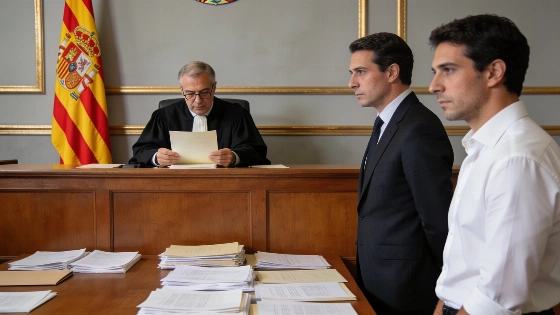
The Audiencia de Badajoz has ruled that David Sánchez, brother of Prime Minister Pedro Sánchez, will not be required to return the salary he earned as coordinator of the conservatories at the Diputación de Badajoz, despite being convicted of administrative misconduct. The court sentenced Sánchez to nine years of disqualification from holding public office, finding that the position he occupied was created specifically for him. Yet, the judges made clear that neither Sánchez nor his colleague Luis Carrero, who received the same penalty, must repay the wages they collected during their tenure.
The verdict addresses a key point raised by popular accusations, which demanded that Sánchez and Carrero return the funds paid by the Diputación. According to the court, only the directly affected parties—the Diputación de Badajoz or the Public Prosecutor—had the legal standing to request restitution of the salaries. Neither entity pursued this claim. The Public Prosecutor’s Office, in fact, sought full acquittal for Sánchez and the other defendants, while the Diputación did not present itself as an injured party in the proceedings.
In its written decision, the court emphasized that the demand for repayment could only be initiated by the local authority that paid the salaries or by the Public Prosecutor if it had filed charges. The judges also noted that, even if such a claim had been made, the matter would likely fall under the jurisdiction of the Tribunal de Cuentas, Spain’s court of auditors, rather than the criminal court. As a result, the court concluded that it was not appropriate to rule on the issue of salary restitution in this case.
This outcome has drawn attention to the procedural nuances of Spanish law regarding civil liability in public sector corruption cases. The case of David Sánchez has already generated significant public debate, especially after the initial verdict that barred him from public office. For further background on the legal proceedings and the broader controversy surrounding the hiring practices in Badajoz, see the detailed coverage in this related report on the court’s decision.
In Spain, the Tribunal de Cuentas is responsible for overseeing the financial accountability of public officials and can order the recovery of misused public funds. However, criminal courts typically do not address civil liability unless specifically requested by a qualified party. The Sánchez case illustrates how procedural steps—or the lack thereof—can determine whether public money is reclaimed following a conviction. The situation also highlights the importance of institutional action in pursuing financial restitution in cases of administrative misconduct. As of now, the legal framework leaves a gap when neither the affected institution nor the prosecutor seeks to recover funds, even after a conviction for creating a position tailored to an individual.