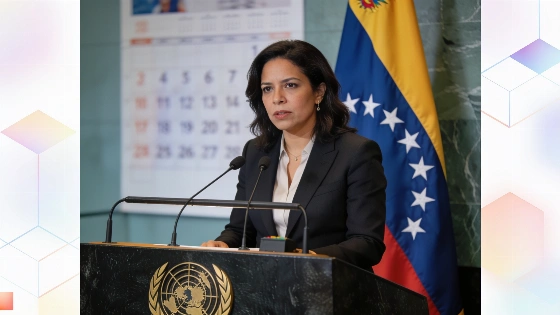
Delcy Rodríguez promised elections at the UN while claiming control over Venezuela's transition. Her pledge came as repression continued and María Corina Machado remained blocked from returning.
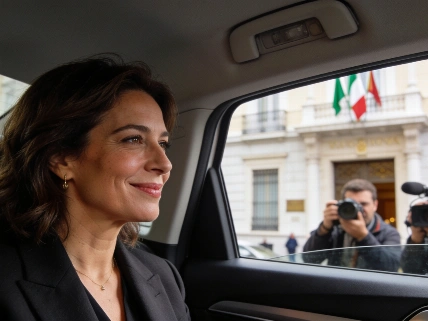
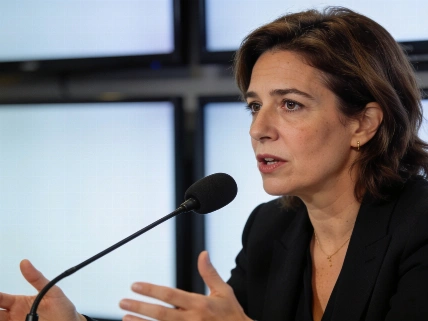
Delcy Rodríguez has promised elections in Venezuela while making clear that she intends to control the transition leading to them. Speaking at the United Nations General Assembly, the interim president offered no timetable for the vote. The central question remains unanswered: when will Venezuelans be allowed to choose their government? Reuters and UN News both reported on September 23, 2026, that Rodríguez presented elections as part of a transition toward full democracy but left the timing open.
Rodríguez presented herself as the official who could move the country from political conflict toward full democracy. She said institutions would be ready when the Venezuelan people decided the time was right. That is a political promise without a date. It also leaves the pace of the transition with the authorities already running the country. Reuters reported that she referred to political dialogue with opposition sectors and said institutions could guarantee an inclusive and transparent process. She did not provide a calendar.
María Corina Machado has said she plans to return to Venezuela to support the opposition and pursue free elections. Those plans were still being discussed publicly in September 2026 and did not amount to a confirmed return.
The speech was also aimed at Donald Trump. After Nicolás Maduro was captured at the beginning of the year, the United States established a cooperative relationship with Venezuela based on Rodríguez remaining in power and on American access to the country's oil reserves. Washington has described democratization as a process that will take time.
Marco Rubio said hours before Rodríguez's address that the goal was a durable republic, not the immediate election of someone taking over a completely devastated country. Rodríguez's message fits that position. It also gives her government the decisive role in setting the pace and conditions of change.
That promise runs into the evidence on the ground.
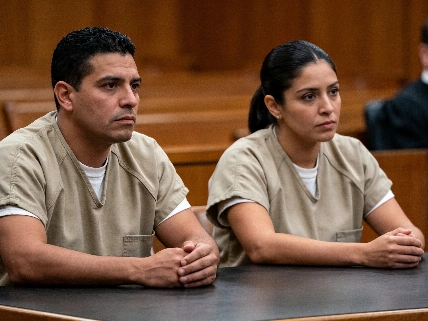
Reports citing UN experts said that, after January releases, between roughly 379 and 500 people could still be detained for political reasons. The same assessments said Venezuela’s repressive security apparatus remained largely intact.
Rodríguez said she had opened a political dialogue with opposition sectors and wanted an inclusive process conducted on equal terms. Yet the government she leads prevented María Corina Machado from returning to Venezuela as the speech was being prepared. A recent UN report said the chavist repression apparatus remained intact. It also recorded dozens of torture cases since Rodríguez became interim president and put the number of political prisoners between 300 and 500. Separate reporting on findings attributed to UN experts put the remaining number at approximately 379 to 500 after January releases. The differing estimates show the uncertainty in the figures, while the scale of political detention remains clear.
Her language about democracy was striking given her record inside the chavist system. Rodríguez has held senior responsibilities in a regime accused in the source material of persecuting opponents, blocking candidates such as Machado, stealing elections and operating through authoritarian rule and corruption. At the UN, she argued that democracy depended not only on holding elections but on the quality of the competition before them.
She also referred to Spain's democratic transition. Rodríguez argued that lasting transitions can come through firm change led by existing institutions rather than through rupture. Her reference to legality becoming a path toward better legality echoed political language associated with Adolfo Suárez and Torcuato Fernández-Miranda, though she did not name either figure.
Rodríguez avoided saying Nicolás Maduro's name. Instead, she referred to two painful tests facing Venezuela in 2026: devastating earthquakes and the strangling of domestic political life amid sharper confrontation with the United States. Maduro is now held in a Brooklyn prison, while Rodríguez represents Venezuela on the UN stage.
The gap between this institutional language and the unresolved repression is sharp, despite the diplomatic setting. The wider international agenda can also contain unrelated developments such as the