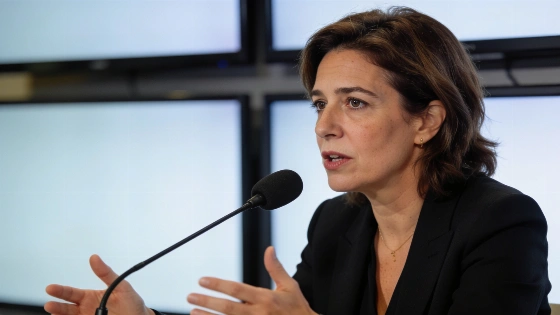
In an interview on Antena 3’s Espejo Público, Ester Muñoz accused Pedro Sánchez’s government of evading responsibility and focused her criticism on Ceuta and housing. The GPP spokesperson in Congress says the city faces constant insecurity and that the government is not making effective use of the state’s legal and material resources.
Her complaint centers on a contradiction in official messages about Morocco. Sánchez speaks of full cooperation with Rabat, while some ministers, Muñoz says, blame Morocco for the crisis and deny that cooperation is sufficient. To the lawmaker, that is a direct inconsistency, not a minor distinction.
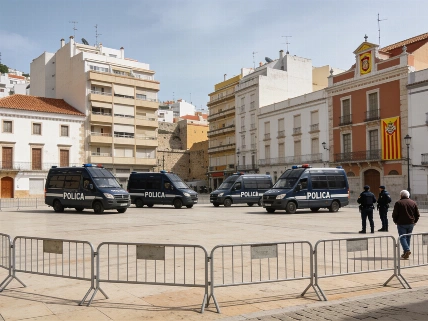
Tensions in Ceuta rose again on September 22 and 23, 2026. On those dates, Sánchez publicly acknowledged that Moroccan border controls had failed during the mass entry on July 30 and 31. Spain asked Rabat for answers and action, while the president maintained that bilateral cooperation was still working.
The government stepped up surveillance in the Tarajal area. By early morning on September 24 and 25, authorities had detected no new mass movements. The situation remained tense, but under control.
Muñoz says the government knew about the problem before the crisis and did nothing. She says it later claimed that everyone involved had left. Now, she argues, it faces a situation that has become entrenched. Her comparison of arrivals in 2021 and 2026 argues that no measures were taken in the intervening years to prevent another crisis.
Her most specific criticism concerns the government’s ability to control Ceuta. Muñoz says the legal and material resources are available, but the government is failing to meet that goal. The dispute over Morocco has moved beyond political messaging to concrete events and questions of responsibility.
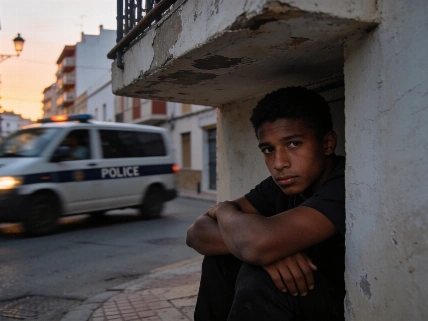
The problem did not end when movements at the border declined. Spain is still managing the situation of unaccompanied minors and the return of people who have no right to remain in the country. The crisis has entered an administrative and diplomatic phase.
On housing, the spokesperson cited CGPJ data to challenge Sánchez’s record. Information from her account, nearly 300,000 evictions have taken place during the president’s eight years in government. Muñoz put the average at about 100 a day. That cumulative figure needs to be checked year by year.
The CGPJ’s latest figures offer a different point of comparison. In the first quarter of 2026, there were 4,005 evictions, 45.4% fewer than in the same period a year earlier. The average was 44.5 a day.
The figure of nearly 300,000 evictions is not automatically confirmed by data from a single period. Checking it would require reviewing the CGPJ’s full monthly or annual series across the eight years cited. The 2026 statistics show a clear decline, but do not settle the cumulative calculation on their own.
Muñoz also rejected proposals from the left. She criticized a call made on Tuesday to expropriate a single home, Maricarmen’s, and the presentation of that measure as an answer to the housing problem. In response to accusations against the PP, she said her party had filed measures and proposals that Francina Armengol would not allow Congress to vote on because they could pass.
The spokesperson applied the same argument to the president’s conduct. Muñoz says Sánchez never accepts responsibility and instead shifts it to the opposition, the media, judges or the state as an undefined legal entity. Her argument is that the government’s decisions should be judged by their effects, even as responsibility is repeatedly assigned to others.
The final issue arose when she discussed Zapatero’s jewels. In Muñoz’s view, the former president had maintained a false account for months. She also said the government had downplayed the difference between receiving a box of sobaos pasiegos and accepting jewels from an Arab sheikh.
Muñoz cited the UDEF’s theory that the jewels may have been payment in kind for work carried out for Venezuela. She added that the possibility may not be time-barred. This is a theory attributed to the investigation, not a proven fact.
The exchange of accusations contrasts with the same outlet’s earlier cultural coverage. This story is far from the stage. The debate centers on evictions and housing, alongside border security and institutional accountability.
Ester Muñoz’s remarks link three disputes through a common demand: that the government answer for its decisions. The eviction figures require a full year-by-year review. Ceuta’s situation involves security measures alongside administrative work and diplomatic talks. The UDEF theory about the jewels remains political and unproven.
The strongest part of her remarks is the public contradiction between acknowledging the failure of Moroccan border controls and defending cooperation with Rabat. The most delicate point is making an investigative theory the centerpiece of a political accusation. Her claims do not all have the same level of support.