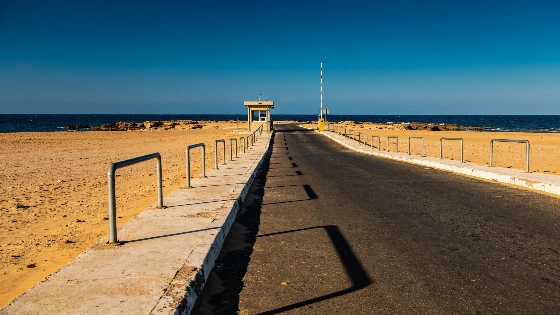
Police reports place Mohamed Al Oouaddi near the Castillejos crossing during the mass entry into Ceuta on 30 and 31 July 2021. A protected witness has now told Audiencia Nacional judge María Tardón that Al Oouaddi warned him of the planned crossing on 10 July. People arrived by sea near Ceuta’s breakwater and through the El Tarajal border area.
According to sources familiar with the questioning, cited by El Confidencial, the witness said the prefect told him the border would be opened and that police under his command were managing online networks to summon people. The witness also said he entered Ceuta by swimming on 13 July. He had lived in Tetuán and worked as a street trader.
He told the judge he had received illegal payments from Al Oouaddi and had followed his instructions since 2019. His account is testimony in an investigation, not a judicial finding.
The CENIF, part of the National Police’s immigration and border unit, named Al Oouaddi among 18 Moroccan officials from security services, civilian bodies and the military in a report. It said images showed him directing and coordinating activity at two separate points during the crossing. Three people who entered Ceuta irregularly also identified him to Spanish investigators.
In a separate report, the CENIF counted 97 connections between Moroccan security personnel and digital groups that organised the crossings on social media. Spanish police investigators also identified between 8,000 and 10,000 identical black-and-white inflatable rings resembling car tyres among the equipment used during the crossing. Investigators said the rings had been distributed along the Moroccan coast and viewed their presence as a possible sign of logistical preparation. The figures and the witness account support the police theory that senior Moroccan security officials were involved, but do not establish it as a court finding.
Estimates of the scale of the July movement vary. Spanish government reporting put the number at about 72,000, while a later National Police assessment estimated between 100,000 and 125,000 entries. It cautioned that the total could not be precisely determined and might include repeat entries. Other reporting put the figure at around 80,000. At least 140 people were reportedly killed during the crossing.
Police use the title prefect to describe Al Oouaddi’s role. His Moroccan post is wali al amn of the Tetuán region. Police reports describe that office as the DGSN’s highest operational authority in a police prefecture, responsible for local stations, mobile units and border posts.
The CENIF says Al Oouaddi was on the road from Castillejos to the border post between 18:00 and 20:00 on 30 July, wearing a DGSN uniform and giving instructions to officers. During that period, a second wave of people reached the beach near his location. Migrants interviewed by investigators said security forces guided them towards the water to swim to Ceuta.
He was seen again near the beach roundabout between late on 30 July and the early hours of the following day. This time, he was in civilian clothes and meeting people identified as organisers. The period coincided with the border closure, the Spanish army’s deployment on its side of the frontier and disturbances in Morocco, including the burning of at least two vehicles.
The July episode followed another mass movement into Ceuta in May 2021, amid a diplomatic dispute after Spain admitted Brahim Ghali, leader of the Polisario Front, for medical treatment. About 8,000 people entered Ceuta on 17 and 18 May by swimming around breakwaters or crossing the border fence. Spanish authorities said roughly 4,000 had been returned to Morocco by 18 May. Morocco denied Spain’s accusation that it had deliberately allowed people to cross.
The testimony is part of the same case covered in an earlier report on the investigation, which also concerned the summons of former Ceuta government delegate Miguel Ángel Pérez Triano. The Guardia Civil and the CNI have said there is no evidence implicating Rabat. The Government of Pedro Sánchez has taken the same position.