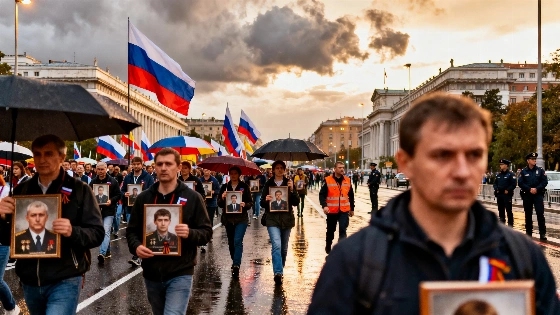
The 'Immortal Regiment' Marched in Madrid: How the Commemorative Event Transformed the City Center. The 'Immortal Regiment' marched through central Madrid: despite the rain, participants walked along main streets with portraits of relatives and Russian flags. The event featured military songs and concluded with a concert. City services ensured safety and minimized transport disruptions.
Key fact: On May 9, the 'Immortal Regiment' march took place in central Madrid—an annual procession in memory of the heroes of World War II. Despite rainy weather, hundreds of participants carrying portraits of relatives and Russian flags walked through the city's main streets, and the event concluded with a concert of war-time songs.
The essence of the news
The 'Immortal Regiment' march was held in Madrid, temporarily altering the usual rhythm of the city center. Participants walked the route from the Prado Museum to one of the main squares, carrying portraits and symbols. The march proceeded peacefully, without incidents, despite traffic restrictions and rain.
Why it matters
For Madrid, such events are not only a matter of remembrance but also a test of the city’s ability to integrate large-scale public initiatives into everyday life. Amid international tensions and increased attention to Russian events abroad, holding the 'Immortal Regiment' in the heart of the Spanish capital takes on added significance for the Russian-speaking diaspora and local residents.
Context
The 'Immortal Regiment' has been held in Madrid since 2016 and has become an annual tradition for the Russian-speaking community in Spain. This year, the event took place against the backdrop of rainy weather, which did not prevent participants from turning out. Organizing the march required coordination with city authorities and police to minimize transport disruptions and ensure safety.
Who it concerns
- Russian-speaking diaspora — an opportunity to publicly honor family members and uphold tradition.
- Residents and visitors of Madrid — temporary changes in traffic and an unusual atmosphere in the city center.
- Municipal services — the need to promptly respond to changes in traffic flow and maintain order.
What could change
The organization of such events in the future may depend on the political climate, the attitude of city authorities, and public opinion. For now, the city shows a readiness to support public initiatives provided order is maintained.
What remains unknown
- How attitudes towards such events might change if international tensions increase.
- Whether additional restrictions or requirements for organization will be introduced in the future.
- How the broader Spanish public reacted — there were no reports of protests or negative incidents.
How not to misinterpret
- The event was not a political protest — its goal was to preserve historical memory.
- Traffic restrictions were temporary and did not cause a traffic collapse.
- The event passed peacefully, with no reports of conflicts or provocations.
Conclusion
The “Immortal Regiment” in Madrid demonstrated that even under challenging international circumstances and adverse weather conditions, the city is able to integrate large-scale commemorative events without significant disruptions. For the Russian-speaking community, this is an important symbol of unity and remembrance; for the city, it is an example of successful organization of a mass event.