Authorities Admit Meetings Between Civil Guard Chief and PSOE Envoy. Spain’s Interior Minister is under pressure after acknowledging meetings between the Civil Guard’s director and Leire Díez. Earlier, officials denied such contacts. The government now explains the meetings as personal in nature.
A new political scandal has erupted in Spain around the Ministry of the Interior: authorities have officially acknowledged that the director of the Civil Guard, Mercedes González, did indeed meet with Leire Díez, known as the PSOE's 'fontanera.' Previously, Minister Fernando Grande-Marlaska and government representatives had repeatedly denied any contacts between González and Díez, but after investigative materials were published, their stance changed.
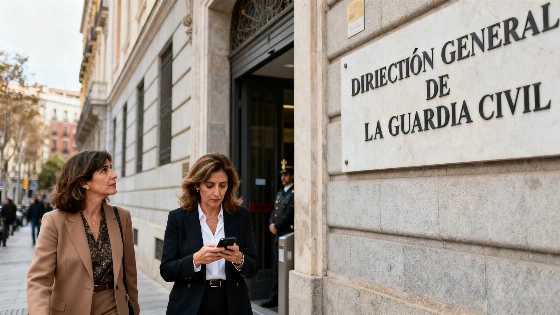
According to information released after reviewing the so-called 'PSOE cloacas' case files, the meetings took place not inside the Civil Guard building, but in its vicinity on Guzmán el Bueno street in Madrid. The case materials mention at least three meetings, as well as messenger correspondence, which was deleted due to automatic message deletion on González's device. Authorities now claim that the meetings were personal in nature and occurred before González was appointed director of the Civil Guard.
On Thursday evening, the Civil Guard issued an official statement confirming two meetings between González and Díez, as well as an attempt to arrange a third, which did not take place due to family reasons. This statement contradicts previous declarations by Minister Marlaska, who just a week ago categorically denied any contacts between the Civil Guard director and Leire Díez. In Parliament and in responses to opposition inquiries, the government also maintained that no meetings had taken place.
During one of the meetings, according to the investigation, Díez tried to ask González about the possibility of reinstating Commander Rubén Villalba, who is involved in the Koldo case. González, according to authorities, refused, and after that, contacts ceased. The government emphasizes that no investigations were conducted against UCO (Central Operative Unit of the Guardia Civil) personnel despite Díez’s requests; on the contrary, it was UCO that began an investigation against Díez herself.
The UCO report notes that Díez tried to influence the leadership of the Guardia Civil to initiate administrative measures against UCO over alleged information leaks. At the same time, according to the government, González did in fact initiate three internal checks, but none of them targeted UCO officers, and investigations into cases involving relatives or associates of Pedro Sánchez continued.
Acknowledgment of the meetings between González and Díez has put Minister Marlaska in a difficult position. Despite public backing from the head of government, his previous statements now raise questions. On Thursday, while in Luxembourg, Marlaska no longer fully denied the possibility of such contacts and instead emphasized González's “exemplary conduct” and said he had no information about any actions that could affect the work of law enforcement agencies.
The context of the situation highlights just how sensitive issues of transparency and political influence over law enforcement agencies are perceived in Spain. In recent years, similar scandals have repeatedly drawn public attention. For comparison, in another high-profile case involving Spanish television, presenter Ivonne Reyes was forced to leave a project after a serious injury, which also sparked wide public response — more details about this can be found in the article about Ivonne Reyes's hospitalization after the incident on the show.
For reference: The Civil Guard is one of Spain’s key law enforcement agencies under the authority of the Ministry of the Interior. Questions regarding the agency's transparency and its leadership are regularly raised in parliamentary debates. In recent years, Spain has seen increased scrutiny over conflicts of interest and attempts at political influence on security agencies, as reflected in the current scandal involving Marlaska and González.