Yolanda Díaz has accused Alberto Núñez Feijóo of misrepresenting the tax treatment of Spain’s minimum wage. She says SMI earners and pensioners with incomes below €21,000 do not pay IRPF after government tax deductions.
Before addressing a SEPE employment programme, Yolanda Díaz challenged Alberto Núñez Feijóo’s account of who benefits from increases to Spain’s minimum wage. On 23 October 2026, the second deputy prime minister said SMI earners do not pay IRPF and accused the PP leader of getting the tax position wrong. Finance Minister Arcadi España also said that a worker earning the 2026 SMI, or €17,094 gross a year, pays no IRPF under the current arrangement.
Feijóo had argued that the Government took the largest share of the money workers gained from the rise in the salario mínimo interprofesional (SMI). In an interview with Cadena SER, he also suggested that the minimum wage had become subject to IRPF after previously being exempt. The 2026 SMI is set at €1,221 a month in 14 payments, equivalent to €17,094 a year or €40.70 a day. The monthly amount is paid in 14 instalments unless the extra payments are prorated.
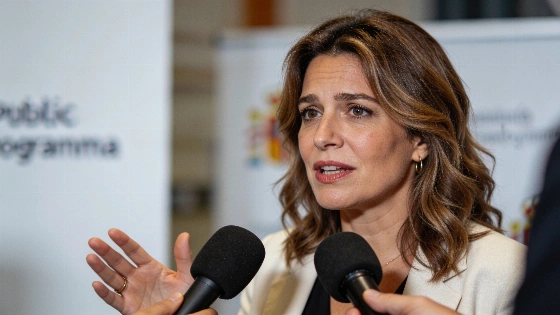
Díaz said government deductions approved in recent years were intended to ensure that people receiving the SMI did not pay income tax after wage increases. The arrangement is a deduction in the annual tax return, rather than a formal exemption from IRPF: for 2026, the deduction is €590.89 for employment income up to €17,094 and is progressively reduced as income rises, phasing out at €20,048.45. Workers with more than one payer may still be required to file a return even when the deduction leaves no final IRPF to pay. Díaz said the same applied to pension income below €21,000 and described the tax changes as cuts for people on lower incomes. Her comments came before she took part in the «Programa TándEM: Transformando vidas», organised by the Servicio Público de Empleo Estatal (SEPE).
The tax debate follows a change in how the income threshold for filing was adjusted. Until 2024, the Treasury raised the relevant threshold when the SMI increased; that year, when the SMI stood at €15,876 annually, the threshold for workers with more than one payer was also raised to €15,876, while the one-payer threshold remained €22,000. The subsequent increase to €17,094 in 2026 was accompanied instead by a specific employment-income deduction. The wage floor is set by royal decree, while the tax relief operates separately through the IRPF rules.
She urged workers to pay attention to the PP’s proposals, arguing that the party did not defend working people. In a post on Bluesky, Díaz said the SMI had risen from €736 in 2018 to €1,221 in 2026 and pledged further increases. She also predicted that the PP would not raise it if it returned to government. Feijóo later said that future SMI increases under a PP government would be automatically protected from IRPF by law.
The site has separately reported RTVE’s selection of 18 acts for Benidorm Fest 2027. Asked about the proposed reform of the working-time register and a measure on salary supplements intended to stop them absorbing SMI increases, Díaz said both were still in progress.