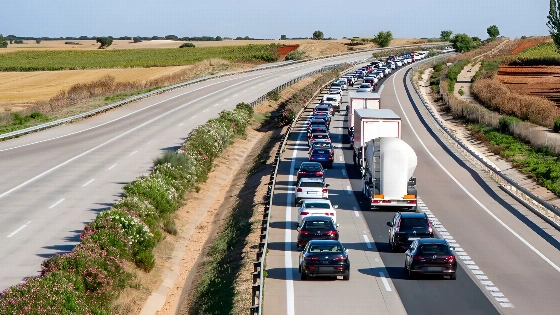
On a two-lane motorway, the emergency passage runs down the middle of the carriageway. Spain’s updated circulation rules require drivers in a queue to move towards the edges and leave that route open for priority vehicles. The DGT identifies Article 32 of the General Traffic Regulations as the provision governing the obligation, which applies to all vehicles caught in a queue on motorways and dual carriageways.
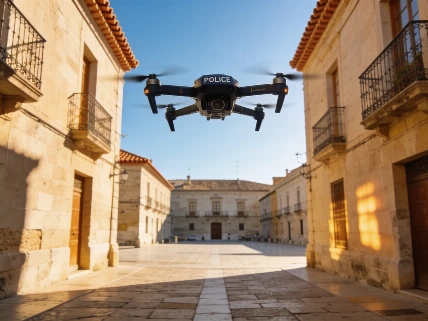
The requirement became mandatory through an update to the General Traffic Regulations that took effect on 1 October. It applies when vehicles are moving at walking pace or have stopped. Ambulances and fire engines need the passage. Police vehicles also qualify. The DGT says drivers should anticipate the need to make room so priority vehicles can pass through congestion.
On roads with two lanes in each direction, drivers in the left lane should move left while those in the right lane move right. That leaves space between the two lines of traffic. Drivers should reduce speed gradually and maintain a safe distance while following directions from police officers or emergency personnel.
With three lanes in each direction, the left-hand lane moves towards the left edge. Drivers in the central and right-hand lanes move right, creating the corridor between the left and central lanes. Drivers in the middle must wait for traffic on their right to make room before edging across within their own lane.
“Orillarse” means moving towards the side of the lane, not changing lanes. A driver in the central lane should therefore move right once the vehicles in the right-hand lane have shifted towards the verge or hard shoulder. The DGT advises against abrupt steering or braking. When making room for an approaching priority vehicle, drivers should move towards the side where they are positioned and never cross in front of it.
Failing to facilitate the passage is classed as a serious offence and can bring a fine of up to €200, with no points deducted. That is a separate rule from the tyre-tread penalty described in this tyre fine report. The DGT has also announced that connected vehicles are due to receive emergency alerts from 2026. Those alerts will give drivers advance notice before emergency vehicles arrive with sirens or warning lights.