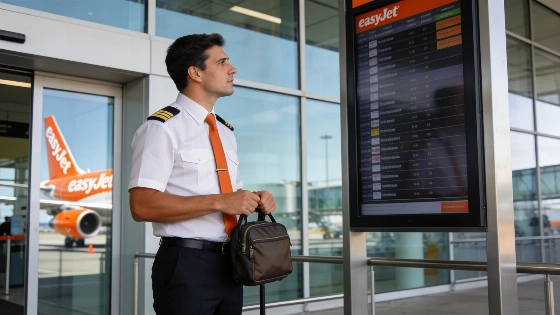
easyJet pilots working in Spain will now receive 144 guaranteed free days plus 30 days of vacation each year. The new collective agreement, officially published in the BOE, separates rest days from vacation and introduces stricter rules for seasonal contracts and alternative shifts.
easyJet pilots based in Spain have reached a new agreement that gives them 144 guaranteed free days each year, plus 30 days of vacation for those on full-time annual contracts. The deal, published in the third collective agreement in the BOE on 11 September 2026, clarifies how rest and vacation days are counted and scheduled, ending years of confusion over pilots' time off.
The agreement covers all pilots at easyJet's Spanish bases and any future locations, but does not include cabin crew or override other airline agreements like the one at Eurowings. The new rules start on 1 March 2025 and run until 29 February 2028, with some retroactive details and specific exceptions. The pilots' union Sepla had announced the deal earlier, but its official publication now makes the changes part of Spanish law.
Monthly rosters must guarantee at least 12 free days, except for February, which requires a minimum of 11, ensuring both monthly and annual minimums are met.
Under the previous 2023 agreement, pilots had 132 standard free days and six special days, with vacation time often unclear due to overlapping definitions. The new rules separate the two: 144 standard free days, plus 30 vacation days for full-year, full-time pilots. Not all rest days can be chosen freely, and contract type affects the final count.
Each month, pilots get at least twelve free days, except in February, which may have eleven. This monthly minimum does not always add up to the annual 144-day total, so at least one extra day must be scheduled each year. Both monthly and annual minimums must be met; one cannot replace the other.
Of the free days, 30 are classified as GDO (guaranteed days off) for full-time, year-round pilots. These can be requested in advance through the crew portal, with a limit of one weekend per month and a spread of one to four GDOs monthly. These are not extra vacation days, but a subset of the annual free days, and their allocation follows a strict process, especially at seasonal bases.
According to several independent summaries of the BOE, the new agreement not only increases the minimum number of free days compared to the 2023 scheme, but also eliminates previous confusion between 'rest days' and 'vacation.' The 30 GDOs are not additional vacation, but a specific category of guaranteed days off that can be requested in advance, clarifying a point that was often misunderstood in earlier contracts.
Talent24h / OK Diario
Vacation rules are more detailed for seasonal contracts. Pilots working eight months with four months off get 20 vacation days plus one for returning to duty; those on nine-month contracts get 23 plus one. This means 21 or 24 vacation days, not the full 30, reflecting the shorter work period. Pilots with reduced hours for legal guardianship or dependent care keep 30 calendar days, adjusted to their contract type, and this protection also applies to those taking block reductions. Summer vacation requests must allow at least five consecutive days off between 1 June and 30 September, but do not guarantee a specific week outside the set system.
The agreement also introduces a voluntary five-on, four-off shift pattern for those wanting a different work-life balance. This keeps full-time status but comes with an 8% cut to base salary, affecting all related pay. For example, a base salary of 5,000 euros would drop to 4,600 euros under this system. This pattern does not include GDOs but keeps the vacation entitlement.
Extended leave is covered as well: pilots can take up to three years off to care for a child, or up to two years for certain family members, with advance notice of 90 and 45 days respectively. Monthly rosters are published by the 17th of the previous month, and pilots must use internal systems to request rest and vacation days according to their contract type.
This new easyJet agreement comes at a time when working conditions in Spain's aviation sector are under close review. Recent operational changes, such as those reported earlier, show how regulatory and contract updates can affect both safety and staff morale.
easyJet's decision to clearly separate rest and vacation days, and to tighten rules for alternative shifts and seasonal contracts, is a response to years of pilot complaints and legal uncertainty. The aim is to bring more stability and predictability to pilot schedules in a competitive market. Whether these guarantees will improve pilots' working lives or simply create new scheduling challenges remains to be seen. For now, easyJet's Spanish pilots have gained a level of clarity that is rare in an industry where time off is often the first thing to go under pressure.