Eight autonomous communities in Spain are now at the highest wildfire risk. Fires in Zaragoza and Guadalajara have forced evacuations and destroyed thousands of hectares. Authorities stabilize the Árchez blaze in Málaga.
Spain is confronting a critical wildfire emergency this weekend, as the State Meteorological Agency has raised the alert to its highest level for eight autonomous communities. The most severe risk zones include Huesca in Aragón, the eastern half of Andalucía, the Region of Murcia, and much of the Community of Madrid outside the metropolitan area. Additional areas under extreme threat are the southeast of Castilla y León, northern Catalonia, nearly all provinces in Castilla-La Mancha, and select stretches in the Comunitat Valenciana.
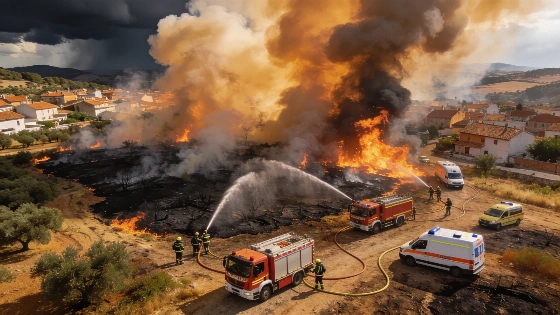
Firefighters remain engaged on multiple fronts. In Zaragoza province, the wildfire in Orés, located in the Cinco Villas region, has already scorched more than 14,000 hectares. The situation has prompted significant concern due to the scale of the affected area and the ongoing threat to nearby communities. Meanwhile, in Guadalajara, the La Mierla fire has devastated approximately 3,500 hectares and led to the evacuation of 11 municipalities, underscoring the widespread impact across central Spain.
In Málaga, emergency services achieved a key milestone overnight by stabilizing the wildfire that broke out in Árchez on Friday. This incident forced the confinement of Cómpeta for over five hours as a precaution. With the immediate threat contained, efforts are now focused on fully controlling and extinguishing the blaze. The rapid response in Málaga highlights the challenges faced by local authorities as they balance public safety with the unpredictable behavior of wildfires during peak risk periods.
According to EL PAÍS, the current wave of fires has placed unprecedented pressure on emergency resources, with multiple regions simultaneously requiring intervention. The agency's updated risk map reflects the influence of weather conditions, particularly high temperatures and dry winds, which continue to fuel the spread of flames across vulnerable landscapes. The situation in Aragón and Castilla-La Mancha is especially volatile, with authorities urging residents to remain vigilant and adhere to safety advisories.
Recent events echo earlier crises in the region. For example, a previous major fire in Orés led to mass evacuations and significant environmental damage, illustrating the recurring nature of wildfire threats in Spain's interior provinces.
Spain's geography and climate make it particularly susceptible to wildfires during the summer months. The combination of prolonged drought, rising temperatures, and strong winds creates ideal conditions for rapid fire spread. In recent years, authorities have intensified prevention campaigns and invested in early warning systems, but the scale of current incidents demonstrates the persistent vulnerability of rural and semi-rural areas. The ongoing emergencies serve as a reminder of the importance of coordinated response efforts and the need for continued public awareness as the wildfire season progresses.