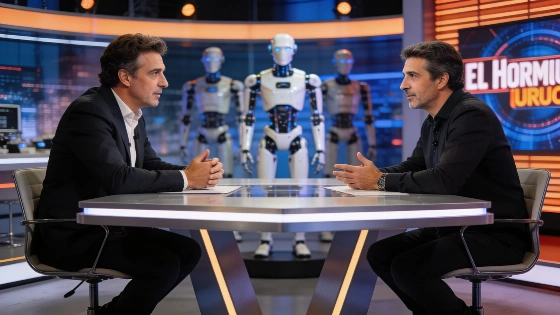
El Hormiguero launched its 21st season with a direct confrontation between Pablo Motos and Carlos Latre. The show abandoned spectacle for a candid discussion about ambition, failure and return. The result was a rare moment of television honesty.
El Hormiguero skipped the usual parade of Hollywood guests and big stunts for its 21st season premiere. Instead, the show opened with a live, unscripted conversation that cut through the polish. Pablo Motos sat across from Carlos Latre and asked the question that had been hanging in the air since Latre left for Telecinco: why did he go, and what did he take away from the Babylon Show collapse?
Latre, who left El Hormiguero in August 2024 to host Babylon Show in direct competition with his old team, returned not as a rival but as someone who had taken a public hit. Motos got straight to the point, asking Latre to explain his decision on air. Latre said he never meant to compete with El Hormiguero or Motos personally, but wanted a chance to step out of the "perpetual second" role. Babylon Show lasted just ten episodes before it was cancelled.
According to Antena 3 and Atresmedia, the 21st season of El Hormiguero launched on September 7, 2026, with a focus on 15 robots and a technology-driven theme.
The conversation moved quickly past ratings and programming. Latre spoke openly about the personal cost of the failed project—the pressure, the criticism, and the doubts about his place in the industry. He described the psychological strain and the relief of finally stepping away. Motos admitted it stung to see a close collaborator become a competitor, but pointed out that in television, failure is both personal and public.
The show wasn't all soul-searching. It opened with a parade of humanoid robots down Madrid's Calle Alcalá, a nod to the season's focus on technology and artificial intelligence. Motos said the next decade would bring changes few are ready for, and that El Hormiguero plans to help explain them. The robots, he said, weren't just a gimmick—they signaled the show's new direction.
Politics made its way in, too. Motos addressed the recent crisis in Ceuta, criticizing the government's response and Prime Minister Pedro Sánchez's absence. The show aired clips of officials offering conflicting explanations. Motos ended the segment by saying that when politicians only talk, it's time to return to the polls. The mood then shifted, as it often does, from politics to humor, with Latre impersonating Sánchez before dropping the act for the main interview.
Spanish press reports that Babylon Show, which Latre left El Hormiguero to host, premiered on August 26, 2024, but was cancelled by Mediaset on September 11, 2024 after approximately 13 episodes, with an initial audience share of about 10.1% and around 1 million viewers.
Later, radio journalists Carlos Alsina and Rafa Latorre joined as season godfathers, talking about their own career changes and the fatigue of daily political coverage. Alsina, who handed over his early morning segment to Latorre, described the relief of stepping back from the nonstop news cycle. Both weighed in on the Ceuta crisis, with Latorre pointing out that the media failed to capture the real scale of events.
El Hormiguero poked fun at itself in its annual in-show film, this time mocking "cuñadismo"—the know-it-all attitude often pinned on the show and its host. The fake "cuñadismo" pandemic became a running joke, with the team searching for a cure and cameos from Spanish and international celebrities. Turning criticism into comedy is a familiar move for the show.
The technical finale was a synchronized robot dance, pulled off after just 20 days of prep. But the moment that stuck was simpler: two men, no scripts, talking about ambition, failure, and coming back. In a TV world hooked on spectacle, El Hormiguero's choice to put vulnerability and honesty front and center was a risk that worked.
As reported earlier, Spanish media often revisits its own history and relationships, but rarely with this kind of openness in prime time. El Hormiguero's season launch showed a program willing to air its own wounds and turn them into real television. After 21 years, the show isn't just running on spectacle—it's betting on authenticity and the nerve to face uncomfortable truths in front of millions.