Electric vehicles in Spain currently enjoy tax exemptions, but a new UK law signals a shift. With battery-powered cars set to be taxed by distance driven, the debate over fair contributions to public coffers is heating up.
Electric car owners in Spain have had it easy. No special taxes. Many fees that hit petrol and diesel drivers simply don’t apply. That could change soon. The United Kingdom just passed a law that puts a new kind of tax on zero-emission vehicles. Now, the question is how long Spain’s current policy will hold out.
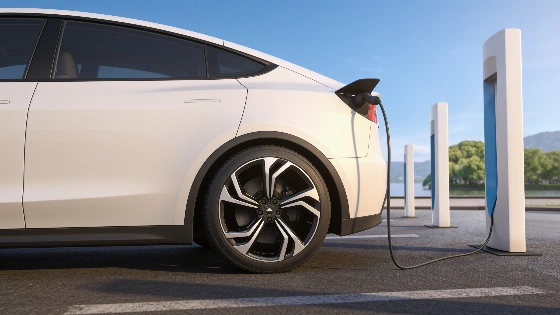
The UK’s new rule is called the ‘Electric Vehicle Excise Duty’ (eVED). It will charge battery-powered car owners for every mile they drive. The law kicks in on April 1, 2028. It won’t replace the current circulation tax (VED). Instead, it stacks on top. Fully electric cars will pay 3 pence per mile. That’s about 1.85 euro cents for each kilometer. Hydrogen vehicles get the same rate. Plug-in hybrids pay less—1.5 pence per mile, or roughly 0.93 euro cents per kilometer.
According to official UK government materials, from April 2025, electric vehicles will no longer be exempt from the standard Vehicle Excise Duty (VED), marking a significant policy shift even before the mileage-based eVED is introduced.
Why are electric cars being singled out? The answer is blunt. Governments are losing money as drivers leave petrol and diesel behind. Fuel taxes make up nearly half the price at the pump. Electric cars skip the gas station—and skip those taxes. The UK’s new system tries to claw back some of that lost cash. It taxes how much you drive, not what you burn. That’s why pure electrics pay more than plug-in hybrids. Hybrids still use some fuel, so they still pay some fuel tax.
No GPS tracking. No new gadgets in the car. The tax will be based on the odometer. Each year, during the vehicle inspection, officials will check the mileage. They’ll compare it to last year’s number and work out the bill. Drive 10,000 kilometers in a year? That’s 185 euros. Go 15,000? The charge jumps to 277.5 euros. At 20,000 kilometers, you’re looking at 370 euros. For many, that’s a real hit. British media, citing official analyses, say the main goal is to make up for lost fuel duty as electric cars take over the roads.
Spain, for now, is a safe zone for electric drivers. No special taxes on battery cars. Several fees that hit combustion vehicles are still waived. But the UK’s move is already sparking talk in other countries. How should everyone pay their share for roads and public services? The Spanish car market has already seen big changes. Used car prices have shot up as demand and supply shift.
Independent reports confirm that, unlike the UK, Spain is currently tightening electric vehicle subsidies rather than introducing a universal mileage tax. The Spanish approach remains focused on incentives, and there is no evidence from official or independent sources that a Spanish version of eVED is being prepared.
Other countries are watching the UK. The days of tax-free electric driving may be numbered. The logic is simple. As more zero-emission cars hit the road, governments need a new way to fund highways and services. For Spanish drivers, the warning is clear. Today’s tax breaks might not last. The rules are already changing elsewhere in Europe.