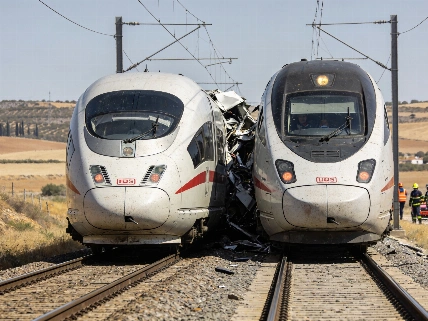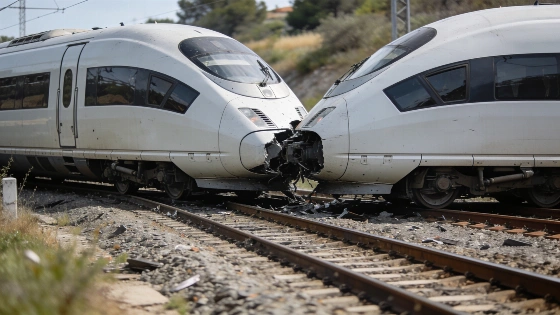
José Trigueros said the LZB system failed early that morning, and trains began running while it was being restored. The president of the Asociación de Ingenieros de Caminos, Canales y Puertos y de la Ingeniería Civil blamed Transport Minister Óscar Puente for the collision between an AVE and an Iryo on the Madrid-Seville line. At least 30 people died. The crash happened shortly after 09:00 on 28 October near kilometre 118, close to Urda in Toledo province. Renfe AVE train 2080, which left Madrid Puerta de Atocha at 08:00, struck the rear of Iryo train 6076, which had departed at 07:54; both were bound for Seville. Two Iryo carriages reportedly derailed. Early casualty estimates varied: local government sources reported at least 30 deaths, while other reports put the toll above 60.
Trigueros accused the minister of allowing infrastructure to be run by incompetent people and criticised maintenance and oversight. He also questioned the decision to resume services after problems with the safety system. Madrid-Seville high-speed services were suspended until further notice after the collision.
Trigueros’s explanation centres on the line’s signalling. He said high-speed tracks are divided into blocks, where a red signal should keep another train out while one is stopped there. A functioning LZB system, he argued, should automatically stop a train even if its driver passes a signal. The Madrid-Seville high-speed line opened in 1992 and has historically used Germany’s LZB system, which continuously monitors train speed and sends movement instructions to the driver’s cab. Newtral has also reported that ASFA is installed as a backup system.
Early reports outlined a possible sequence: an LZB failure stopped about eight trains, after which the control centre switched to manual or degraded operation and authorised trains to move again. In that account, an Iryo train did not restart and remained on the track as the following Renfe AVE continued and struck it. This is a preliminary account, not an official finding. Trigueros says the train should have been stopped automatically.
That remains Trigueros’s assessment; no official determination of the crash’s cause is given in the report. Responding to suggestions that human error was responsible, he argued that a protocol relying on a driver to avoid a possible mistake would itself be inadequate. Spain’s Comisión de Investigación de Accidentes Ferroviarios (CIAF) is responsible for determining the causes and issuing technical recommendations. The Instituto de la Ingeniería de España said investigators should examine onboard event recorders and voice records, as well as route data from the control centre and the infrastructure’s mechanical condition.
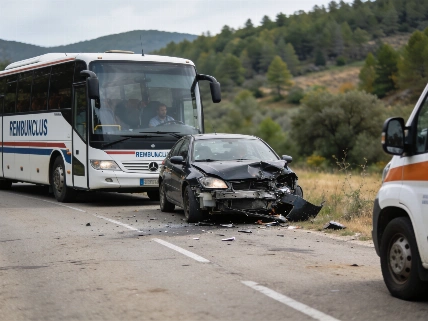
RUSSPAIN has also covered transport-safety scrutiny after a separate coach crash, including debate over standing passengers. Trigueros, a former president of the Instituto de la Ingeniería de España (IIE), said the train should have been stopped automatically and rejected blaming the driver.